
Search results: 147 results for “by Dr. Martin Luther King Jr.”
Not finding what you're looking for? Check out our shop on bookshop.org to order and still support us ♥
147 results
-
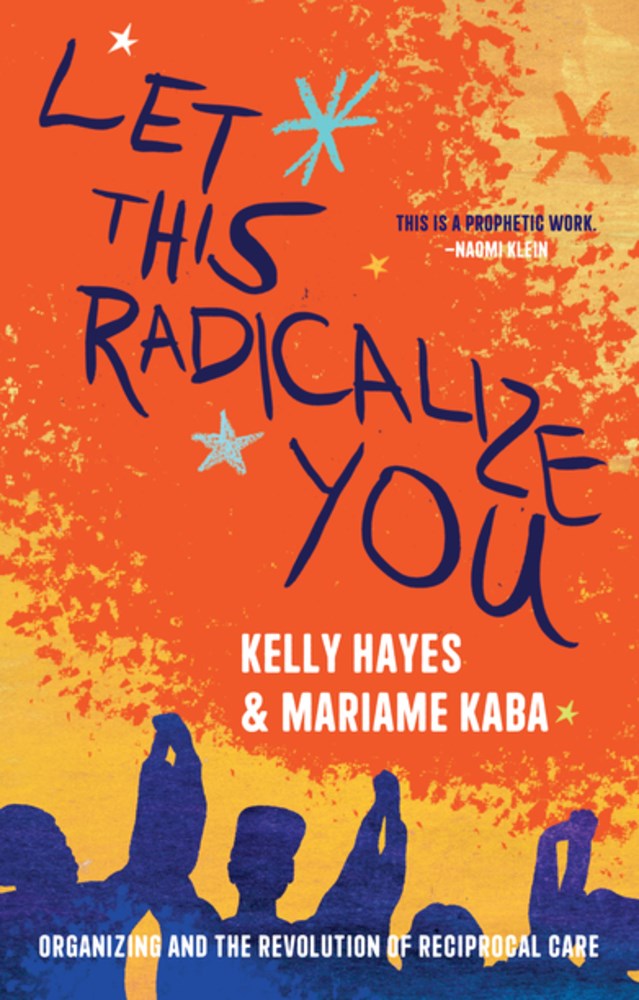
Let This Radicalize You : Organizing and the Revolution of Reciprocal Care
![Let This Radicalize You : Organizing and the Revolution of Reciprocal Care]()
Let This Radicalize You : Organizing and the Revolution of Reciprocal Care
by Mariame Kaba
Sold outWhat fuels and sustains activism and organizing when it feels like our worlds are collapsing? Let This Radicalize You is a practical and imaginative resource for activists and organizers building power in an era of destabilization and catastrophe.
Longtime organizers and movement educators Mariame Kaba and Kelly Hayes examine some of the political lessons of the COVID-19 pandemic, including the convergence of mass protest and mass formations of mutual aid, and consider what this confluence of power can teach us about a future that will require mass acts of care, rescue and defense, in the face of both state violence and environmental disaster.
The book is intended to aid and empower activists and organizers as they attempt to map their own journeys through the work of justice-making. It includes insights from a spectrum of experienced organizers, including Sharon Lungo, Carlos Saavedra, Ejeris Dixon, Barbara Ransby, and Ruth Wilson Gilmore about some of the difficult and joyous lessons they have learned in their work. -
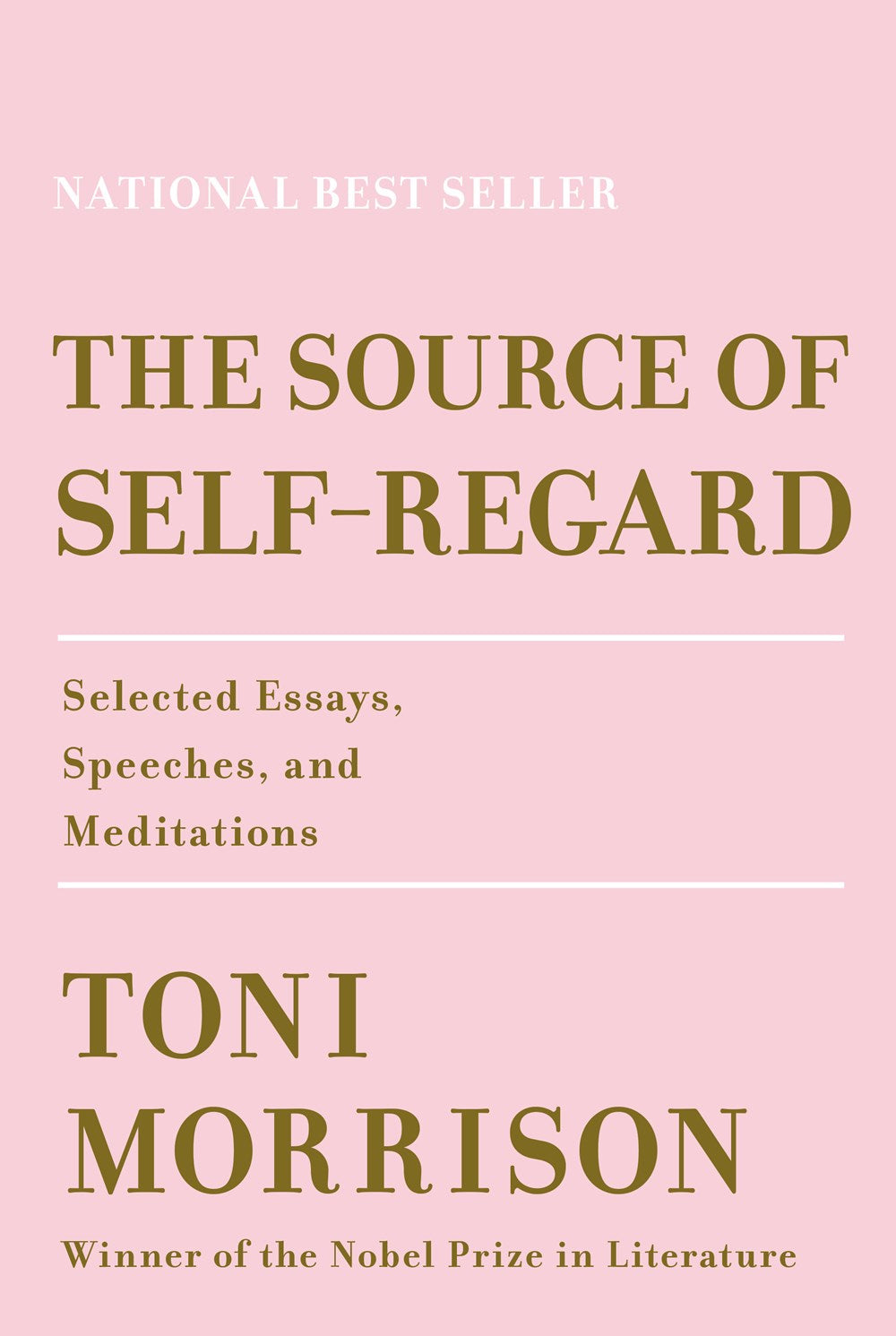
The Source of Self-Regard: Selected Essays, Speeches, and Meditations
![The Source of Self-Regard: Selected Essays, Speeches, and Meditations]()
The Source of Self-Regard: Selected Essays, Speeches, and Meditations
by Toni Morrison
Sold outNATIONAL BESTSELLER • Here is the Nobel Prize winner in her own words: a rich gathering of her most important essays and speeches, spanning four decades that "speaks to today’s social and political moment as directly as this morning’s headlines” (NPR).
These pages give us her searing prayer for the dead of 9/11, her Nobel lecture on the power of language, her searching meditation on Martin Luther King Jr., her heart-wrenching eulogy for James Baldwin. She looks deeply into the fault lines of culture and freedom: the foreigner, female empowerment, the press, money, “black matter(s),” human rights, the artist in society, the Afro-American presence in American literature. And she turns her incisive critical eye to her own work (The Bluest Eye, Sula, Tar Baby, Jazz, Beloved,Paradise) and that of others.
An essential collection from an essential writer, The Source of Self-Regard shines with the literary elegance, intellectual prowess, spiritual depth, and moral compass that have made Toni Morrison our most cherished and enduring voice. -
A Second Sight: How the Wonder and Vision of Black Mediamakers Push America Toward Freedom – The Essential Role of Journalism in American Democracy
![A Second Sight: How the Wonder and Vision of Black Mediamakers Push America Toward Freedom – The Essential Role of Journalism in American Democracy cover image]()

A Second Sight: How the Wonder and Vision of Black Mediamakers Push America Toward Freedom – The Essential Role of Journalism in American Democracy
Sold out"I have been waiting for a book like this, and I’m so glad it's here." — Clint Smith, author of How the Word is Passed
Since the nation’s founding, Black Americans have had a unique perspective on the U.S. experience—a “second sight”—that reveals the truth about the nation to itself. As renowned media scholar Sarah J. Jackson charts in this bold and daring masterwork, at the center of this effort has been an extraordinary cast of Black journalists, photographers, filmmakers, radio hosts, podcasters and other mediamakers who have drawn on the visionary tradition of second sight to advance democracy and broaden our most fundamental American values.
When Black mediamakers raise their voices and speak uncomfortable truths about America, they shape memories of the nation and push us toward a future more closely aligned with our espoused values. For two centuries, this “second sight” has been an overlooked engine of American democracy.
Drawing from W.E.B. Du Bois’s philosophical work, along with deep historical analysis and dozens of interviews with today’s most active Black mediamakers, A Second Sight shows these visionaries positioned at the margins of their industries and navigating fraught relationships to power. They’ve warned of the greatest dangers to democracy—from slavery to Nazism, and mass incarceration to misinformation. Their work is central to our culture and politics. Yet it is devalued, met with violent censure, or achieved only via ingenious work-arounds. This tension has sharpened their commitments to truth.
Now one of our nation’s foremost scholars of American media, Sarah J. Jackson, presents an appraisal that situates Black mediamakers at the vanguard of telling the American story. Brilliant, urgent and illuminating, A Second Sight is an authentic and candid grappling with a discordant thread in the American fabric and, in tracing a bolder vision for the nation, presents a way forward.
-
The Invisible Ache: Black Men Identifying Their Pain and Reclaiming Their Power
![The Invisible Ache: Black Men Identifying Their Pain and Reclaiming Their Power]()

The Invisible Ache: Black Men Identifying Their Pain and Reclaiming Their Power
by Courtney B. Vance & Dr. Robin L. Smith
Sold outA moving combination of memoir, psychology, and practical tools, this book offers Black men guidance and support for reclaiming mental well-being and finding whole, full-hearted living.
Early in his career, actor Courtney B. Vance lost his father to suicide. Recently, he lost his godson to the same fate. Still, as mental health discourse hits the mainstream, it leaves the most vulnerable out of the conversation: Black men.
In America, we teach that strength means holding back tears and shaming your own feelings. In the Black community, these pressures are especially poignant. Poor mental health outcomes-- including diagnoses of depression and anxiety, reliance on prescription drugs, and suicide-- have skyrocketed in the past decade. Institutionalized racism, microagressions, and stress caused by socioeconomic factors have led Black individuals to face worse mental health outcomes than any other demographic.
In this book, Courtney B. Vance seeks to change this trajectory. Along with professional expertise from famed psychologist Dr. Robin Smith (popularly known as “Dr. Robin”), Courtney B. Vance explores issues of grief, relationships, identity, and race through the telling of his own most formative experiences. Together, Courtney and Dr. Robin provide a guide for Black men navigating life’s ups and downs, reclaiming mental well-being, and examining broken pieces to find whole, full-hearted living. Self-care is an act of revolution. It’s time to revolutionize mental health in the Black community. -
NOVEMBER 2024: Non Fiction Book Club - November 19 @ 7PM
![NOVEMBER 2024: Non Fiction Book Club - November 19 @ 7PM]()

NOVEMBER 2024: Non Fiction Book Club - November 19 @ 7PM
Sold outBook Club Meeting DEETS
When: Tuesday, November 19 @ 7PM
Where: Kindred Stories (2304 Stuart Street, HTX, 77004)
How: RSVP ONLY to let us know you plan to attend or RSVP WITH BOOK to support Non Fiction Book Club and our other programming.
About We Refuse
Black resistance to white supremacy is often reduced to a simple binary, between Dr. Martin Luther King Jr.’s nonviolence and Malcolm X’s “by any means necessary.” In We Refuse, historian Kellie Carter Jackson urges us to move past this false choice, offering an unflinching examination of the breadth of Black responses to white oppression, particularly those pioneered by Black women.
The dismissal of “Black violence” as an illegitimate form of resistance is itself a manifestation of white supremacy, a distraction from the insidious, unrelenting violence of structural racism. Force—from work stoppages and property destruction to armed revolt—has played a pivotal part in securing freedom and justice for Black people since the days of the American and Haitian Revolutions. But violence is only one tool among many. Carter Jackson examines other, no less vital tactics that have shaped the Black struggle, from the restorative power of finding joy in the face of suffering to the quiet strength of simply walking away.
Clear-eyed, impassioned, and ultimately hopeful, We Refuse offers a fundamental corrective to the historical record, a love letter to Black resilience, and a path toward liberation. -
God Made My Face: A Collective Portrait of James Baldwin
![God Made My Face: A Collective Portrait of James Baldwin]()

God Made My Face: A Collective Portrait of James Baldwin
edited by Hilton Als
Sold outBaldwin’s life and legacy as remembered by a pantheon of artists and writers: from Jamaica Kincaid and Barry Jenkins to Richard Avedon and Alice Neel
When author James Baldwin died in 1987, he left behind an extraordinary body of work: novels, poems, film scripts and, perhaps most indelibly, essays. A friend and supporter of Martin Luther King Jr., Malcolm X and Medgar Evers, Baldwin was a critical voice in the civil rights movement. After reaching acclaim in his early career as a writer, he struggled to retain the author’s “I,” while taking on the “we” of the people.
Edited by Pulitzer Prize–winning author Hilton Als and growing out of his landmark exhibition at David Zwirner in 2019, God Made My Face brings together an impressive assembly of contributors, ranging from Baldwin biographer David Leeming to novelist Jamaica Kincaid and Moonlight director Barry Jenkins, to create a memorial mosaic: one that not only mirrors Baldwin’s various tones but also closely examines his singular contributions to cinema, theater, the essay and Black American critical studies. These essays are illustrated by artwork from modern and contemporary artists who were either personal contemporaries of Baldwin or directly inspired by his work. In each piece assembled here, the authors speak from a personal, informed perspective, illuminating Baldwin’s deeply anguished and enlightened voice and his belief that, ultimately—because we are human—we share the potential to love, connect and live together in all our glory.
Artists include: Diane Arbus, Eugène Atget, Richard Avedon, Don Bachardy, Alvin Baltrop, Anthony Barboza, Njideka Akunyili Crosby, Beauford Delaney, Marlene Dumas, Glenn Ligon, George McCalman, Alice Neel, Elle Pérez, Cameron Rowland, Kara Walker, James Welling, Larry Wolhandler.
Authors include:Stephen Best, Daphne A. Brooks, Teju Cole, Marianne Jean-Baptiste, Barry Jenkins, Jamaica Kincaid, David Leeming, Darryl Pinckney. -
For Which We Stand: How Our Government Works and Why it Matters
![For Which We Stand: How Our Government Works and Why it Matters cover image]()

For Which We Stand: How Our Government Works and Why it Matters
Sold outDiscover everything you ever wanted to know about how the government really works with this accessible, highly designed and illustrated handbook from Marjory Stoneman Douglas AP government teacher Jeff Foster.
Now more than ever, it's so important for everyone to understand our government: where it came from, how it works, and how we can bring about change. And, after all, in the words of author and government teacher Jeff Foster, "If you don't participate, you can't complain."This book is a comprehensive and entertaining guide that answers questions like: What is the Constitution? What are the branches of the government? What is the Electoral College? What are the political parties? What are the different responsibilities of the city, state, and federal governments?Plus, discover the complete backstory on some of our government's most important moments, like why we wrote the Declaration of Independence, and how people since then have worked with―and protested against―the government to improve the lives of all Americans.Each spread features a mix of black-and-white and full-color art, including infographics, charts, maps, political caricatures, and other engaging visual elements that will be fun and easy for kids to understand.Includes a foreword from Yolanda Renee King, an activist and the granddaughter of Martin Luther King, Jr. and Coretta Scott King, plus lots of amazing back matter about how kids can participate and get involved.
-
The Battle for the Black Mind
![The Battle for the Black Mind cover image]()

The Battle for the Black Mind
Karida L. Brown Ph.D
Sold outFrom a NAACP award-winning historian and Fulbright scholar, a history of education in the United States from the end of the Civil War to the historic ruling of Brown v. Board of Education.
In The Battle for the Black Mind, Dr. Karida Brown explores the struggle to define and control the education of African Americans amid shifting societal attitudes and forms of systemic exclusion. From the perspective of freed slaves seeking empowerment and liberation through education, to the white elites aiming to shape the future of the workforce and consolidate power, The Battle for the Black Mind explores the formation of segregated education systems and the influence of philanthropic organizations, religious institutions, and Black educators themselves in shaping these structures. It also examines the global reach of these education models, particularly their impact on African societies under colonial rule.
Ultimately, Dr. Brown presents a critical investigation of the foundational roots of racial inequality in American education, arguing that it wasn't just about the separation of institutions—but about controlling access to the ideals of American democracy.
-
History Teaches Us to Resist: How Progressive Movements Have Succeeded in Challenging Times
![History Teaches Us to Resist: How Progressive Movements Have Succeeded in Challenging Times cover image]()

History Teaches Us to Resist: How Progressive Movements Have Succeeded in Challenging Times
Mary Frances Berry
Sold outHistorian and civil rights activist proves how progressive movements can flourish even in conservative times.
Despair and mourning after the election of an antagonistic or polarizing president, such as Donald Trump, is part of the push-pull of American politics. But in this incisive book, historian Mary Frances Berry shows that resistance to presidential administrations has led to positive change and the defeat of outrageous proposals, even in challenging times. Noting that all presidents, including ones considered progressive, sometimes require massive organization to affect policy decisions, Berry cites Indigenous peoples’ protests against the Dakota pipeline during Barack Obama’s administration as a modern example of successful resistance built on earlier actions.
Beginning with Franklin D. Roosevelt, Berry discusses that president’s refusal to prevent race discrimination in the defense industry during World War II and the subsequent March on Washington movement. She analyzes Lyndon Johnson, the war in Vietnam, and the antiwar movement and then examines Ronald Reagan’s two terms, which offer stories of opposition to reactionary policies, such as ignoring the AIDS crisis and retreating on racial progress, to show how resistance can succeed.
The prochoice protests during the George H. W. Bush administration and the opposition to Bill Clinton’s “Don’t Ask, Don’t Tell” policy, as well as his budget cuts and welfare reform, are also discussed, as are protests against the war in Iraq and the Patriot Act during George W. Bush’s presidency. Throughout these varied examples, Berry underscores that even when resistance doesn’t achieve all the goals of a particular movement, it often plants a seed that comes to fruition later.
Berry also shares experiences from her six decades as an activist in various movements, including protesting the Vietnam War and advocating for the Free South Africa and civil rights movements, which provides an additional layer of insight from someone who was there. And as a result of having served in five presidential administrations, Berry brings an insider’s knowledge of government.
History Teaches Us to Resist is an essential book for our times which attests to the power of resistance. It proves to us through myriad historical examples that protest is an essential ingredient of politics, and that progressive movements can and will flourish, even in perilous times.
-
African American Religion: A Very Short Introduction (Very Short Introductions)
![African American Religion: A Very Short Introduction (Very Short Introductions) cover image]()

African American Religion: A Very Short Introduction (Very Short Introductions)
Sold outSince the first African American denomination was established in Philadelphia in 1818, churches have gone beyond their role as spiritual guides in African American communities and have served as civic institutions, spaces for education, and sites for the cultivation of individuality and identities in the face of limited or non-existent freedom.
In this Very Short Introduction, Eddie S. Glaude Jr. explores the history and circumstances of African American religion through three examples: conjure, African American Christianity, and African American Islam. He argues that the phrase "African American religion" is meaningful only insofar as it describes how through religion, African Americans have responded to oppressive conditions including slavery, Jim Crow apartheid, and the pervasive and institutionalized discrimination that exists today. This bold claim frames his interpretation of the historical record of the wide diversity of religious experiences in the African American community. He rejects the common tendency to racialize African American religious experiences as an inherent proclivity towards religiousness and instead focuses on how religious communities and experiences have developed in the African American community and the context in which these developments took place.
About the Series: Oxford's Very Short Introductions series offers concise and original introductions to a wide range of subjects--from Islam to Sociology, Politics to Classics, Literary Theory to History, and Archaeology to the Bible. Not simply a textbook of definitions, each volume in this series provides trenchant and provocative--yet always balanced and complete--discussions of the central issues in a given discipline or field. EveryVery Short Introduction gives a readable evolution of the subject in question, demonstrating how the subject has developed and how it has influenced society. Eventually, the series will encompass every major academic discipline, offering all students an accessible and abundant reference library. Whatever the area of study that one deems important or appealing, whatever the topic that fascinates the general reader, the Very Short Introductions series has a handy and affordable guide that will likely prove indispensable.
-
Dr. No: A Novel
![Dr. No: A Novel]()

Dr. No: A Novel
by Percival Everett
Sold outA sly, madcap novel about supervillains and nothing, really, from an American novelist whose star keeps rising
The protagonist of Percival Everett’s puckish new novel is a brilliant professor of mathematics who goes by Wala Kitu. (Wala, he explains, means “nothing” in Tagalog, and Kitu is Swahili for “nothing.”) He is an expert on nothing. That is to say, he is an expert, and his area of study is nothing, and he does nothing about it. This makes him the perfect partner for the aspiring villain John Sill, who wants to break into Fort Knox to steal, well, not gold bars but a shoebox containing nothing. Once he controls nothing he’ll proceed with a dastardly plan to turn a Massachusetts town into nothing. Or so he thinks.
With the help of the brainy and brainwashed astrophysicist-turned-henchwoman Eigen Vector, our professor tries to foil the villain while remaining in his employ. In the process, Wala Kitu learns that Sill’s desire to become a literal Bond villain originated in some real all-American villainy related to the murder of Martin Luther King Jr. As Sill says, “Professor, think of it this way. This country has never given anything to us and it never will. We have given everything to it. I think it’s time we gave nothing back.”
Dr. No is a caper with teeth, a wildly mischievous novel from one of our most inventive, provocative, and productive writers. That it is about nothing isn’t to say that it’s not about anything. In fact, it’s about villains. Bond villains. And that’s not nothing.
-
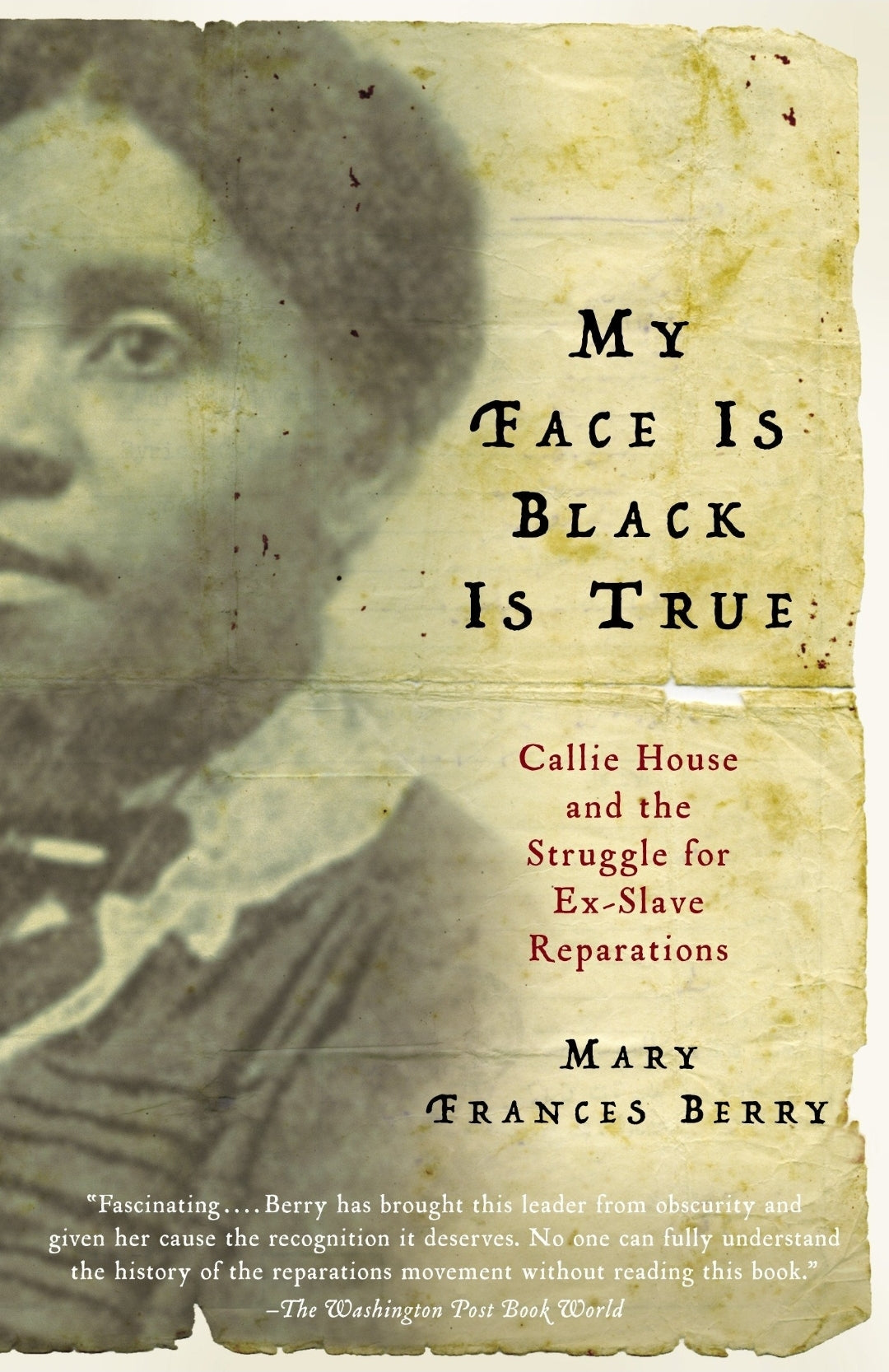
My Face Is Black Is True by Mary Frances Berry
![My Face Is Black Is True by Mary Frances Berry]()
My Face Is Black Is True by Mary Frances Berry
Sold outAcclaimed historian Mary Frances Berry resurrects the remarkable story of ex-slave Callie House who, seventy years before the civil-rights movement, demanded reparations for ex-slaves. A widowed Nashville washerwoman and mother of five, House (1861-1928) went on to fight for African American pensions based on those offered to Union soldiers, brilliantly targeting $68 million in taxes on seized rebel cotton and demanding it as repayment for centuries of unpaid labor. Here is the fascinating story of a forgotten civil rights crusader: a woman who emerges as a courageous pioneering activist, a forerunner of Malcolm X and Martin Luther King, Jr.


Stay Informed. We're building a community committed to celebrating Black authors + artisans. Subscribe to keep up with all things Kindred Stories.