
Search results: 115 results for “Daniel Black”
Not finding what you're looking for? Check out our shop on bookshop.org to order and still support us ♥
115 results
-
Integrated: How American Schools Failed Black Children
![Book cover image]()

Integrated: How American Schools Failed Black Children
Noliwe Rooks
Sold outA powerful, incisive reckoning with the impacts of school desegregation that traces four generations of the author’s family to show how the implementation of integration decimated Black school systems and did much of the Black community a disservice
On May 17, 1954 the landmark case Brown v. Board of Education determined that racial segregation in schools was unconstitutional. Heralded as a massive victory for civil rights, the decision's goal was to give Black children equitable access to educational opportunities and clear a path to a better future. Yet in the years following the ruling, schools in predominantly Black neighborhoods were shuttered or saw their funding dwindle, Black educators were fired en masse, and Black children faced discrimination and violence from their white peers as they joined resource-rich schools that were ill-prepared for the influx of new students.
Award-winning interdisciplinary scholar of education and Black history Noliwe Rooks weaves together sociological data and cultural history to challenge the idea that integration was a boon for Black children. She tells the story of her grandparents, who were among the thousands of Black teachers fired following the Brown decision; her father, who was traumatized by his experiences at an almost exclusively-white school; her own experiences moving from a flourishing, racially diverse school to an underserved inner-city one; and finally her son and his Black peers, who over half-century after Brown still struggle with hostility and prejudice from white teachers and students alike. She also shows how present-day discrimination lawsuits directly stem from the mistakes made during integration.
At once assiduously researched and deeply engaging, Integrated tells the story of how education has remained both a tool for community progress and a seemingly inscrutable cultural puzzle. Rooks' deft hand turns the story of integration's past and future on it's head, and shows how we may better understand and support generations of students to come.
-
IRL AUTHOR TALK: The Wilderness with Angela Flournoy - October 6 @ 7 PM
![IRL AUTHOR TALK: The Wilderness with Angela Flournoy - October 6 @ 7 PM]()

IRL AUTHOR TALK: The Wilderness with Angela Flournoy - October 6 @ 7 PM
Sold outCelebrate the release of The Wilderness with Angela Flournoy!
EVENT DEETS
When: Monday, October 6 @ 7PM
Where: 2310 Elgin Street, Unit 2, Houston, Texas, 77004
How: RSVP ONLY to reserve your seat or RSVP WITH BOOK to support the author and our store programming
Please note that only copies of The Wilderness purchased from Kindred Stories will be allowed in the signing line.
ABOUT THE BOOK
An era-defining novel about five Black women over the course of their twenty-year friendship, as they move through the dizzying and sometimes precarious period between young adulthood and midlife—in the much-anticipated second book from National Book Award finalist Angela Flournoy.
Desiree, Danielle, January, Monique, and Nakia are in their early twenties and at the beginning. Of their careers, of marriage, of motherhood, and of big-city lives in New York and Los Angeles. Together, they are finding their way through the wilderness, that period of life when the reality of contemporary adulthood—overwhelming, mysterious, and full of freedom and consequences—swoops in and stays.
Desiree and Danielle, sisters whose shared history has done little to prevent their estrangement, nurse bitter family wounds in different ways. January’s got a relationship with a “good” man she feels ambivalent about, even after her surprise pregnancy. Monique, a librarian and aspiring blogger, finds unexpected online fame after calling out the university where she works for its plans to whitewash fraught history. And Nakia is trying to get her restaurant off the ground, without relying on the largesse of her upper middle-class family who wonder aloud if she should be doing something better with her life.
As these friends move from the late 2000’s into the late 2020’s, from young adults to grown women, they must figure out what they mean to one another—amid political upheaval, economic and environmental instability, and the increasing volatility of modern American life.
The Wilderness is Angela Flournoy’s masterful and kaleidoscopic follow-up to her critically acclaimed debut The Turner House. A generational talent, she captures with disarming wit and electric language how the most profound connections over a lifetime can lie in the tangled, uncertain thicket of friendship.
ABOUT THE AUTHOR
Angela Flournoy is the author of The Turner House, which was a finalist for the National Book Award, a finalist for the Center for Fiction First Novel Prize, a Barnes & Noble Discover Great New Writers selection, an Indie Next pick, and a New York Times Notable Book of the Year. Her fiction has appeared in The Paris Review, and she has written for The New York Times, The New Yorker, Los Angeles Times, and elsewhere. A graduate of the Iowa Writers’ Workshop, Flournoy has taught at the University of Iowa, Princeton University, and UCLA. She lives in New York
ABOUT THE MODERATOR
Kiese Laymon is a Black southern writer from Jackson, Mississippi. In his observant, often hilarious work, Laymon does battle with the personal and the political: race and family, body and shame, poverty and place. His savage humor and clear-eyed perceptiveness have earned him comparisons to Ta-Nehisi Coates, Alice Walker, and Mark Twain. He is the author of the award-winning memoir Heavy, the groundbreaking essay collection How to Slowly Kill Yourself and Others in America, and the genre-defying novel Long Division.
Laymon’s memoir Heavy won the 2019 Andrew Carnegie Medal for Excellence in Nonfiction, the 2018 Christopher Isherwood Prize for Autobiographical Prose, and the Austen Riggs Erikson Prize for Excellence in Mental Health Media. Heavy was also named one of the 50 Best Memoirs of the Past 50 Years and one of the 100 Best Books of the 21st Century by The New York Times. A personal narrative that illuminates national failures, Heavy is defiant yet vulnerable—an insightful, often comical exploration of weight, identity, art, friendship, and family. In a starred review, Kirkus wrote, “Laymon skillfully couches his provocative subject matter in language that is pyrotechnic and unmistakably his own…. A dynamic memoir that is unsettling in all the best ways.” Heavy was named a best book of 2018 by the New York Times, Publishers Weekly, NPR, Broadly, Buzzfeed, The Washington Post, Entertainment Weekly. The audiobook, read by the author, was named the Audible 2018 Audiobook of the Year.
-
Muslim Cool
![Muslim Cool]()
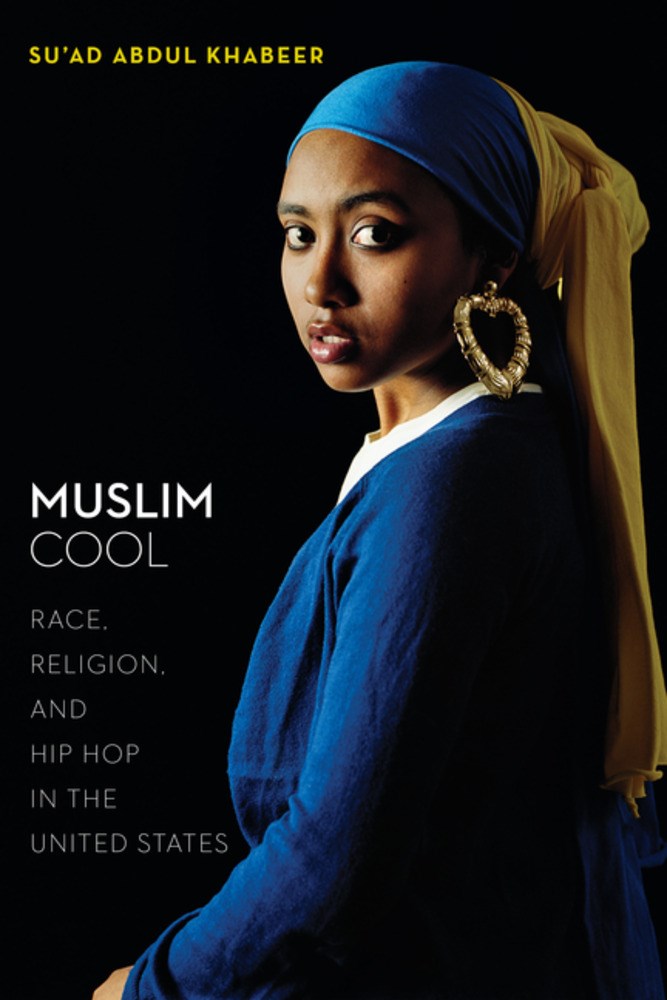
Muslim Cool
by Su'ad Abdul Khabeer
Sold outInterviews with young Muslims in Chicago explore the complexity of identities formed at the crossroads of Islam and hip hop
This groundbreaking study of race, religion and popular culture in the 21st century United States focuses on a new concept, “Muslim Cool.” Muslim Cool is a way of being an American Muslim—displayed in ideas, dress, social activism in the ’hood, and in complex relationships to state power. Constructed through hip hop and the performance of Blackness, Muslim Cool is a way of engaging with the Black American experience by both Black and non-Black young Muslims that challenges racist norms in the U.S. as well as dominant ethnic and religious structures within American Muslim communities.
Drawing on over two years of ethnographic research, Su'ad Abdul Khabeer illuminates the ways in which young and multiethnic US Muslims draw on Blackness to construct their identities as Muslims. This is a form of critical Muslim self-making that builds on interconnections and intersections, rather than divisions between “Black” and “Muslim.” Thus, by countering the notion that Blackness and the Muslim experience are fundamentally different, Muslim Cool poses a critical challenge to dominant ideas that Muslims are “foreign” to the United States and puts Blackness at the center of the study of American Islam. Yet Muslim Cool also demonstrates that connections to Blackness made through hip hop are critical and contested—critical because they push back against the pervasive phenomenon of anti-Blackness and contested because questions of race, class, gender, and nationality continue to complicate self-making in the United States. -
The Truths We Hold: An American Journey
![The Truths We Hold: An American Journey]()
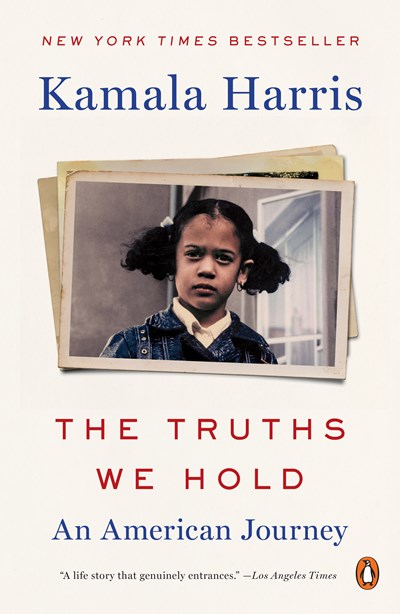
The Truths We Hold: An American Journey
by Kamala Harris
Sold outVice President Kamala Harris’s commitment to speaking truth is informed by her upbringing. The daughter of immigrants, she was raised in an Oakland, California community that cared deeply about social justice; her parents—an esteemed economist from Jamaica and an admired cancer researcher from India—met as activists in the civil rights movement.
Growing up, Harris herself never hid her passion for justice, and when she became a deputy district attorney out of law school, she quickly established herself as one of the most innovative change agents in American law enforcement. She progressed rapidly to become the elected District Attorney for San Francisco, and then the chief law enforcement officer of California as a whole. Known for bringing a voice to the voiceless and championing the middle class, she took on the big banks during the foreclosure crisis and won a historic settlement for California’s working families. Her hallmarks were applying a holistic, data-driven approach to many of California’s thorniest issues; neither “tough” nor “soft” but smart on crime became her mantra.
Being smart means learning the truths that can make us better as a community, and supporting those truths with all our might. That has been the pole star that is guiding Harris now as a transformational United States Senator, grappling with an array of complex issues that affect her state, our country, and the world, from health care to immigration, national security, the opioid crisis, and accelerating inequality.
-
Madness: Race and Insanity in a Jim Crow Asylum
![Madness: Race and Insanity in a Jim Crow Asylum]()
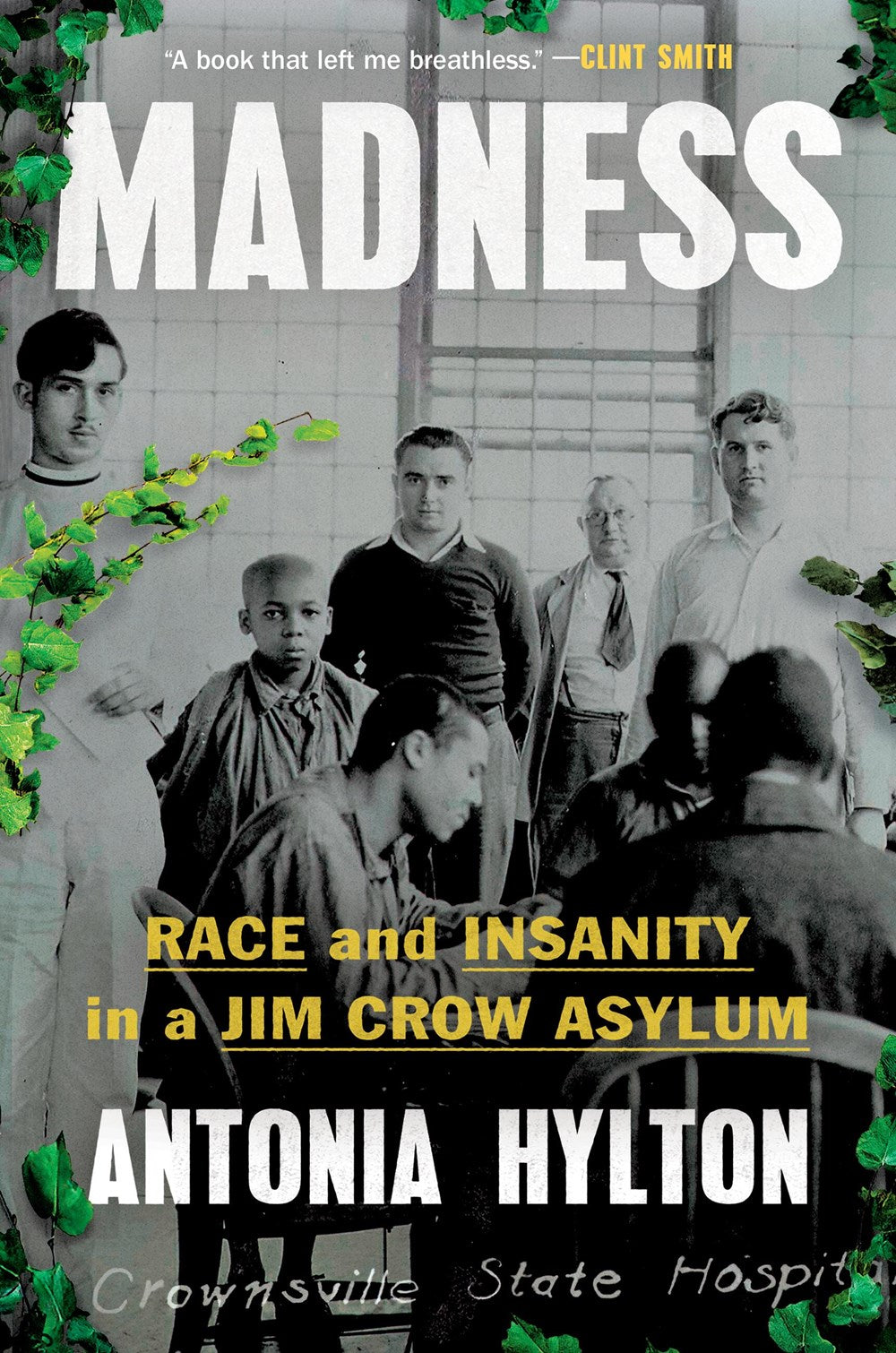
Madness: Race and Insanity in a Jim Crow Asylum
by Antonia Hylton
Sold outIn the tradition of The Immortal Life of Henrietta Lacks, a page-turning 93-year history of Crownsville Hospital, one of the nation’s last segregated asylums, that New York Times bestselling author Clint Smith describes as “a book that left me breathless.”
On a cold day in March of 1911, officials marched twelve Black men into the heart of a forest in Maryland. Under the supervision of a doctor, the men were forced to clear the land, pour cement, lay bricks, and harvest tobacco. When construction finished, they became the first twelve patients of the state’s Hospital for the Negro Insane. For centuries, Black patients have been absent from our history books. Madness transports readers behind the brick walls of a Jim Crow asylum.
In Madness, Peabody and Emmy award-winning journalist Antonia Hylton tells the 93-year-old history of Crownsville Hospital, one of the last segregated asylums with surviving records and a campus that still stands to this day in Anne Arundel County, Maryland. She blends the intimate tales of patients and employees whose lives were shaped by Crownsville with a decade-worth of investigative research and archival documents. Madness chronicles the stories of Black families whose mental health suffered as they tried, and sometimes failed, to find safety and dignity. Hylton also grapples with her own family’s experiences with mental illness, and the secrecy and shame that it reproduced for generations.
As Crownsville Hospital grew from an antebellum-style work camp to a tiny city sitting on 1,500 acres, the institution became a microcosm of America’s evolving battles over slavery, racial integration, and civil rights. During its peak years, the hospital’s wards were overflowing with almost 2,700 patients. By the end of the 20th-century, the asylum faded from view as prisons and jails became America’s new focus.
In Madness, Hylton traces the legacy of slavery to the treatment of Black people’s bodies and minds in our current mental healthcare system. It is a captivating and heartbreaking meditation on how America decides who is sick or criminal, and who is worthy of our care or irredeemable. -
The Colored Cartoon: Black Presentation in American Animated Short Films, 1907-1954
![The Colored Cartoon: Black Presentation in American Animated Short Films, 1907-1954 cover image]()

The Colored Cartoon: Black Presentation in American Animated Short Films, 1907-1954
Sold outFrom the introduction of animated film in the early 1900s to the 1950s, ethnic humor was a staple of American-made cartoons. Yet as Christopher Lehman shows in this revealing study, the depiction of African Americans in particular became so inextricably linked to the cartoon medium as to influence its evolution through those five decades. He argues that what is in many ways most distinctive about American animation reflects white animators' visual interpretations of African American cultural expression.
The first American animators drew on popular black representations, many of which were caricatures rooted in the culture of southern slavery. During the 1920s, the advent of the sound-synchronized cartoon inspired animators to blend antebellum-era black stereotypes with the modern black cultural expressions of jazz musicians and Hollywood actors. When the film industry set out to desexualize movies through the imposition of the Hays Code in the early 1930s, it regulated the portrayal of African Americans largely by segregating black characters from others, especially white females. At the same time, animators found new ways to exploit the popularity of African American culture by creating animal characters like Bugs Bunny who exhibited characteristics associated with African Americans without being identifiably black.
By the 1950s, protests from civil rights activists and the growing popularity of white cartoon characters led animators away from much of the black representation on which they had built the medium. Even so, animated films today continue to portray African American characters and culture, and not necessarily in a favorable light.
Drawing on a wide range of sources, including interviews with former animators, archived scripts for cartoons, and the films themselves, Lehman illustrates the intimate and unmistakable connection between African Americans and animation.
-
Hoodoo: A Little Introduction
![Book cover image]()
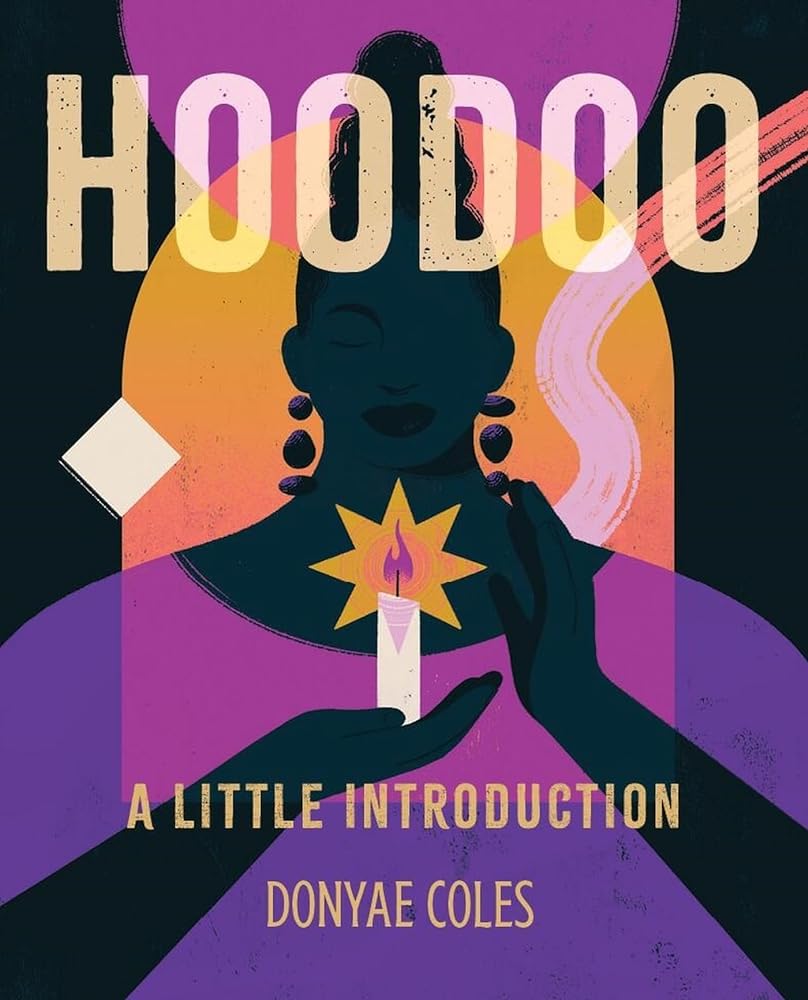
Hoodoo: A Little Introduction
by Donyae Coles
Sold outDiscover the history, practices, and magic of Hoodoo—from veneration of ancestors to worship rituals—in this miniature illustrated guidebook, written by a longtime practitioner.
Hoodoo is a rich cultural and spiritual tradition, created by enslaved Africans and practiced today throughout the United States. This multi-faceted practice draws on elements of African spiritual traditions, Christianity, Spiritualism, indigenous knowledge, and natural healing. This gorgeously illustrated miniature book delves into the practice, history, and profound magic of Hoodoo, and its significance for the Black community within the United States, as well as ways to incorporate this tradition into your own practice.


- ← Previous
- page 1
- page …
- page 8
- page 9
- page 10
Stay Informed. We're building a community committed to celebrating Black authors + artisans. Subscribe to keep up with all things Kindred Stories.