
Search results: 16 results for “w.e.b. du bois movement school for abolition and reconstruction”
Not finding what you're looking for? Check out our shop on bookshop.org to order and still support us ♥
16 results
-
W.E.B. Du Bois: Black Reconstruction (LOA #350): An Essay Toward a History of the Part whichBlack Folk Played in the Attempt to ReconstructDemocracy in America, 1860–1880 (Library of America, 350)
![W.E.B. Du Bois: Black Reconstruction (LOA #350): An Essay Toward a History of the Part whichBlack Folk Played in the Attempt to ReconstructDemocracy in America, 1860–1880 (Library of America, 350) cover image]()

W.E.B. Du Bois: Black Reconstruction (LOA #350): An Essay Toward a History of the Part whichBlack Folk Played in the Attempt to ReconstructDemocracy in America, 1860–1880 (Library of America, 350)
W.E.B. Du Bois
$45.00A definitive edition of the landmark book that forever changed our understanding of the Civil War’s aftermath and the legacy of racism in America
Upon publication in 1935, W.E.B. Du Bois’s now classic Black Reconstruction offered a revelatory new assessment of Reconstruction—and of American democracy itself. One of the towering African American thinkers and activists of the twentieth century, Du Bois brought all his intellectual powers to bear on the nation’s post-Civil War era of political reorganization, a time when African American progress was met with a white supremacist backlash and ultimately yielded to the consolidation of the unjust social order of Jim Crow.
Black Reconstruction is a pioneering work of revisionist scholarship that, in the wake of the censorship of Du Bois’s characterization of Reconstruction by the Encyclopedia Britannica, was written to debunk influential historians whose racist ideas and emphases had disfigured the historical record. “The chief witness in Reconstruction, the emancipated slave himself,” Du Bois argued, “has been almost barred from court. His written Reconstruction record has been largely destroyed and nearly always neglected.” In setting the record straight Du Bois produced what co-editor Eric Foner has called an “indispensable book,” a magisterial work of detached scholarship that is also imbued with passionate outrage.
Presented in a handsome and authoritative hardcover edition prepared by Foner and co-editor Henry Louis Gates, Jr., Black Reconstruction is joined here for the first time with important writings that trace Du Bois’s thinking throughout his career about Reconstruction and its centrality in understanding the tortured course of democracy in America.
-
Black Reconstruction in America 1860-1880
![Black Reconstruction in America 1860-1880]()
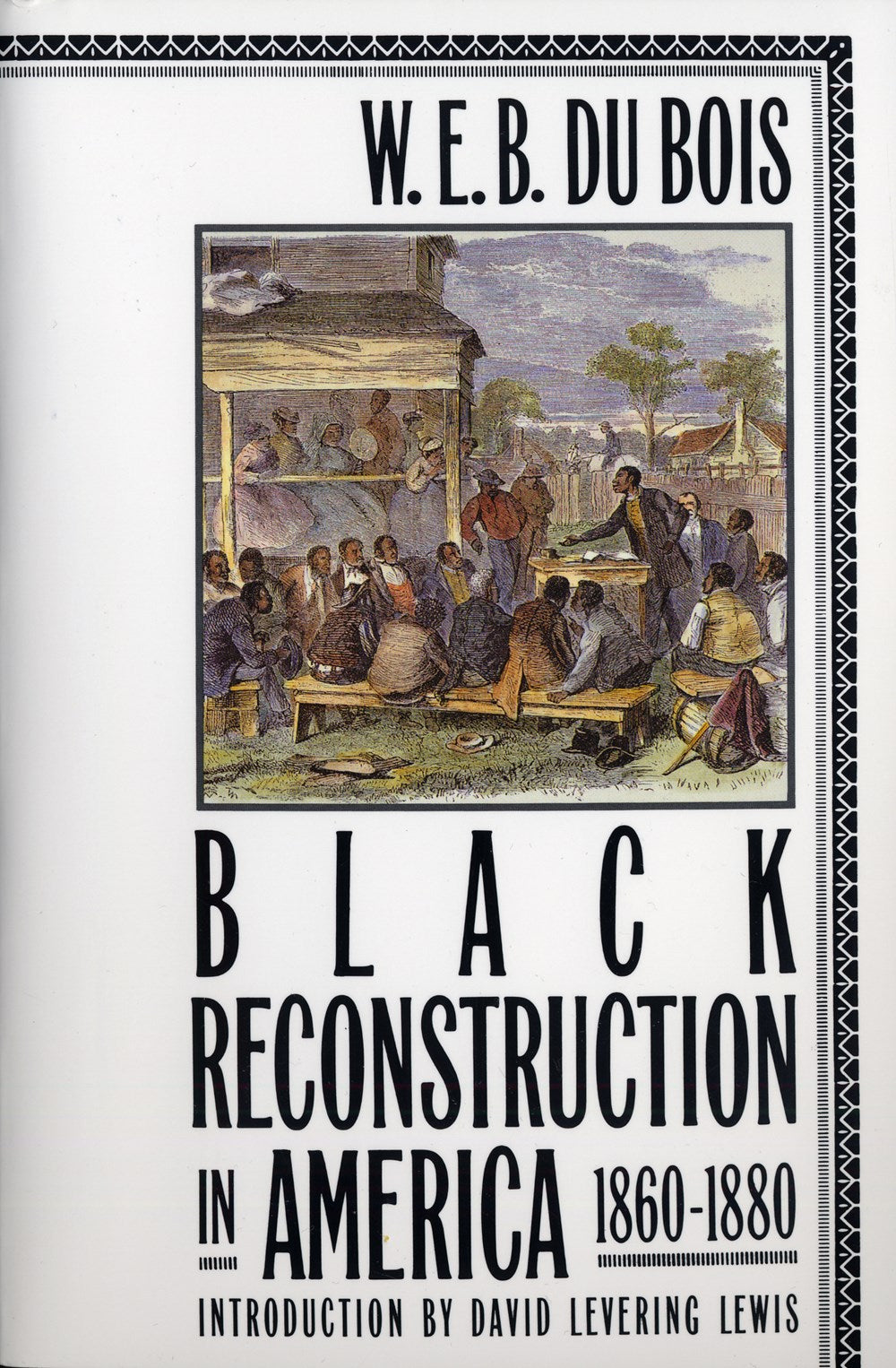
Black Reconstruction in America 1860-1880
by W. E. B. Du Bois
$26.00The pioneering work in the study of the role of Black Americans during Reconstruction by the most influential Black intellectual of his time.
This pioneering work was the first full-length study of the role black Americans played in the crucial period after the Civil War, when the slaves had been freed and the attempt was made to reconstruct American society. Hailed at the time, Black Reconstruction in America 1860–1880 has justly been called a classic. -
The Education of Black People: Ten Critiques, 1906-1960
![The Education of Black People: Ten Critiques, 1906-1960]()
The Education of Black People: Ten Critiques, 1906-1960
$18.00Undoubtedly the most influential black intellectual of the twentieth century and one of America's finest historians, W.E.B. DuBois knew that the liberation of the African American people required liberal education and not vocational training. He saw education as a process of teaching certain timeless values: moderation, an avoidance of luxury, a concern for courtesy, a capacity to endure, a nurturing love for beauty. At the same time, DuBois saw education as fundamentally subversive. This was as much a function of the well-established role of educationfrom Plato forwardas the realities of the social order under which he lived. He insistently calls for great energy and initiative; for African Americans controlling their own lives and for continued experimentation and innovation, while keeping education's fundamentally radical nature in view.
Though containing speeches written nearly one-hundred years ago, and on a subject that has seen more stormy debate and demagoguery than almost any other in recent history, The Education of Black People approaches education with a timelessness and timeliness, at once rooted in classical thought that reflects a remarkably fresh and contemporary relevance. -
Reading Black Reconstruction Today
![Reading Black Reconstruction Today cover image]()

Reading Black Reconstruction Today
$34.95A free ebook version of this title is available through Luminos, University of California Press's Open Access publishing program. Visit www.luminosoa.org to learn more.
We are living through a period of perpetual crises and explosive struggles for liberation on a global scale. This transdisciplinary collection explores what W. E. B. Du Bois's groundbreaking 1935 work, Black Reconstruction in America, tells us about repression and resistance across the world, asking: What do abolition and reconstruction mean today? What would it take for these concepts to become a global reality? How can we make sense of our political moment, from the resurgence of Black consciousness across the Americas, to the rise of neofascism in Europe and beyond, to the fight against land dispossession in Africa? Reading "Black Reconstruction" Today draws together a group of leading scholars and activists to explore the lasting relevance of Du Bois's political masterwork.
-
W. E. B. Du Bois Stickers | Black History | Activists
![W. E. B. Du Bois Stickers | Black History | Activists]()

W. E. B. Du Bois Stickers | Black History | Activists
$4.00Celebrate the legacy of W. E. B. Du Bois, a trailblazing scholar, writer, and civil rights activist, with this premium die-cut sticker. Perfect for history enthusiasts, educators, and those who appreciate Black intellectual excellence, this sticker adds a meaningful touch to laptops, water bottles, notebooks, and more. Made from durable, waterproof material with a matte finish, it’s designed to last. ✨ Great for seasonal displays & themed promotions: • Black History Month & Educational Collections • Bookstores, Museum Shops & Gift Stores • Perfect for Teachers, Students & Scholars • Ideal for Cultural & Literary Enthusiasts 📌 Product details: • Size: Approx. 3” x2.6 " • Durable, waterproof vinyl with a matte finish • Dishwasher safe and long-lasting •Packaging: Sold individually; no packaging -
In the Shadow of Du Bois: Afro-Modern Political Thought in America
![In the Shadow of Du Bois: Afro-Modern Political Thought in America cover image]()

In the Shadow of Du Bois: Afro-Modern Political Thought in America
Robert Gooding-Williams
$32.00The Souls of Black Folk is Du Bois’s outstanding contribution to modern political theory. It is his still influential answer to the question, “What kind of politics should African Americans conduct to counter white supremacy?” Here, in a major addition to American studies and the first book-length philosophical treatment of Du Bois’s thought, Robert Gooding-Williams examines the conceptual foundations of Du Bois’s interpretation of black politics.
For Du Bois, writing in a segregated America, a politics capable of countering Jim Crow had to uplift the black masses while heeding the ethos of the black folk: it had to be a politics of modernizing “self-realization” that expressed a collective spiritual identity. Highlighting Du Bois’s adaptations of Gustav Schmoller’s social thought, the German debate over the Geisteswissenschaften, and William Wordsworth’s poetry, Gooding-Williams reconstructs Souls’ defense of this “politics of expressive self-realization,” and then examines it critically, bringing it into dialogue with the picture of African American politics that Frederick Douglass sketches in My Bondage and My Freedom. Through a novel reading of Douglass, Gooding-Williams characterizes the limitations of Du Bois’s thought and questions the authority it still exerts in ongoing debates about black leadership, black identity, and the black underclass. Coming to Bondage and then to these debates by looking backward and then forward from Souls, Gooding-Williams lets Souls serve him as a productive hermeneutical lens for exploring Afro-Modern political thought in America.
-
The Love Songs of W.E.B. Du Bois
![The Love Songs of W.E.B. Du Bois]()

The Love Songs of W.E.B. Du Bois
by Honorée Fanonne Jeffers
from $20.00“My life had its significance and its only deep significance because it was part of a Problem,” W. E. B. Du Bois once wrote. Since childhood, Ailey Pearl Garfield has understood these words all too well. Bearing the names of two formidable Black Americans—the revered choreographer Alvin Ailey and her great grandmother, the descendant of slaves and tenant farmers—Ailey carries the weight of this Problem on her shoulders.
The daughter of an accomplished doctor and a strict schoolteacher, Ailey is raised in the City but spends summers in the small Georgia town of Chicasetta, where her mother’s family has lived since their ancestors arrived from Africa in bondage. Growing up, she struggles with this duality, a battle for belonging that shapes her identity. On one side are her exacting parents and her imperious, light-skinned grandmother Nana Claire, to whom skin color is paramount. On the other, Ailey feels the pull of the “deep country” of her mother’s land-tending family, whose forebears endured the horrors of slavery and Jim Crow.
But how can Ailey live up to everyone’s expectations when half of her family rejects the truth of a fraught racial history, while the rest can’t ever seem to break away from it?
-
Lessons in Liberation: An Abolitionist Toolkit for Educators
![Lessons in Liberation: An Abolitionist Toolkit for Educators]()
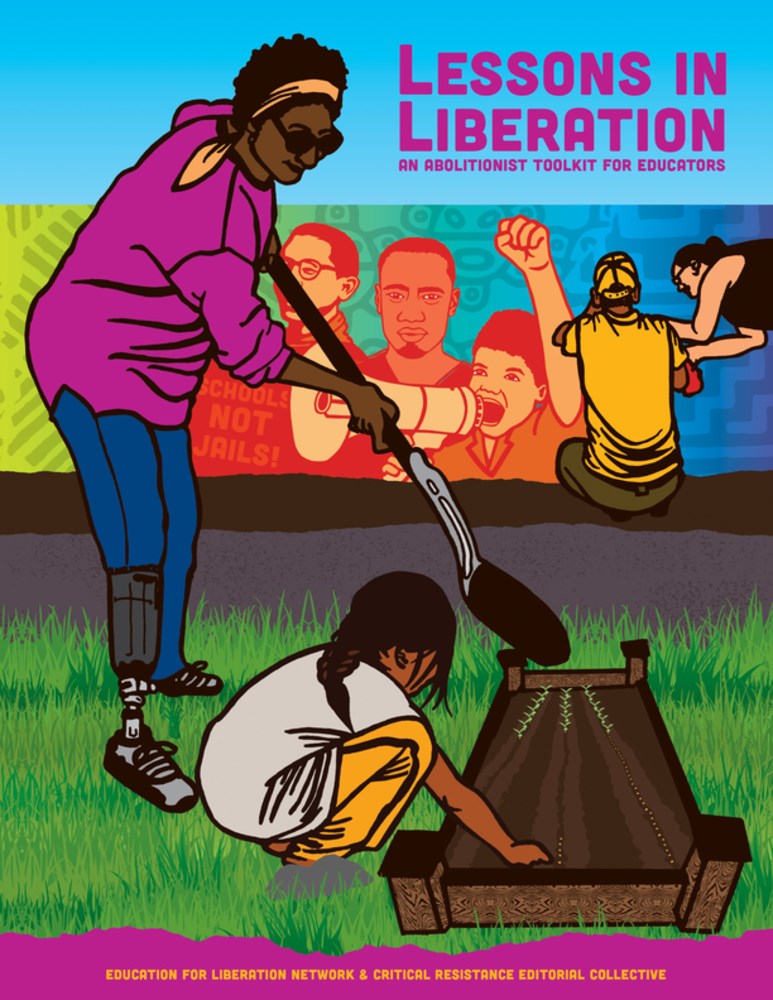
Lessons in Liberation: An Abolitionist Toolkit for Educators
by The Education for Liberation Network & Critical Resistance Editorial Collective
$25.00A political vision for a future ripe with alternatives to imprisonment and punishment.
Born from sustained organizing, and rooted in Black and women of color feminisms, disability justice, and other movements, abolition calls for an end to our reliance on imprisonment, policing and surveillance, and to imagine a safer future for our communities.
Lessons in Liberation: An Abolitionist Toolkit for Educators offers entry points to build critical and intentional bridges between educational practice and the growing movement for abolition. Designed for educators, parents, and young people, this toolkit shines a light on innovative abolitionist projects, particularly in pre-K–12 learning contexts.
Sections are dedicated to entry points into Prison Industrial Complex abolition and education; the application of the lessons and principles of abolition; and stories about growing abolition outside of school settings. Topics addressed throughout include student organizing, immigrant justice in the face of ICE, approaches to sex education, arts-based curriculum, and building abolitionist skills and thinking in lesson plans.
The result of patient and urgent work, and more than five years in the making, Lessons in Liberation invites educators into the work of abolition.
Contributors include Black Organizing Project, Chicago Women’s Health Center, Mariame Kaba and Project NIA, Bettina L. Love, the MILPA Collective, and artists from the Justseeds Collective, among others.
-
We Are the Leaders We Have Been Looking For (The W. E. B. Du Bois Lectures)
![Book cover image]()
We Are the Leaders We Have Been Looking For (The W. E. B. Du Bois Lectures)
from $18.95From the author of the New York Times bestseller Begin Again, a politically astute, lyrical meditation on how ordinary people can shake off their reliance on a small group of professional politicians and assume responsibility for what it takes to achieve a more just and perfect democracy.
“Like attending a jazz concert with all of one’s favorite musicians…James Baldwin, Martin Luther King, Jr., Malcolm X, Ella Baker, Toni Morrison, and more…Glaude brilliantly takes us on an epic tour through their lives and work.”
―Henry Louis Gates, Jr., author of The Black Box: Writing the RaceWe are more than the circumstances of our lives, and what we do matters. In We Are the Leaders We Have Been Looking For, one of the nation’s preeminent scholars and a New York Times bestselling author, Eddie S. Glaude Jr., makes the case that the hard work of becoming a better person should be a critical feature of Black politics. Through virtuoso interpretations of Martin Luther King, Jr., Malcolm X, and Ella Baker, Glaude shows how we have the power to be the heroes that our democracy so desperately requires.
Based on the Du Bois Lectures delivered at Harvard University, the book begins with Glaude’s unease with the Obama years. He felt then, and does even more urgently now, that the excitement around the Obama presidency constrained our politics as we turned to yet another prophet-like figure. He examines his personal history and the traditions that both shape and overwhelm his own voice.
Glaude weaves anecdotes about his evolving views on Black politics together with the writings of Ralph Waldo Emerson, John Dewey, Toni Morrison, James Baldwin, and Ralph Ellison, encouraging us to reflect on the lessons of these great thinkers and address imaginatively the challenges of our day in voices uniquely our own.
Narrated with passion and philosophical intensity, this book is a powerful reminder that if American democracy is to survive, we must step out from under the shadows of past giants to build a better society―one that derives its strength from the pew, not the pulpit.
-
Darkwater
![Darkwater]()
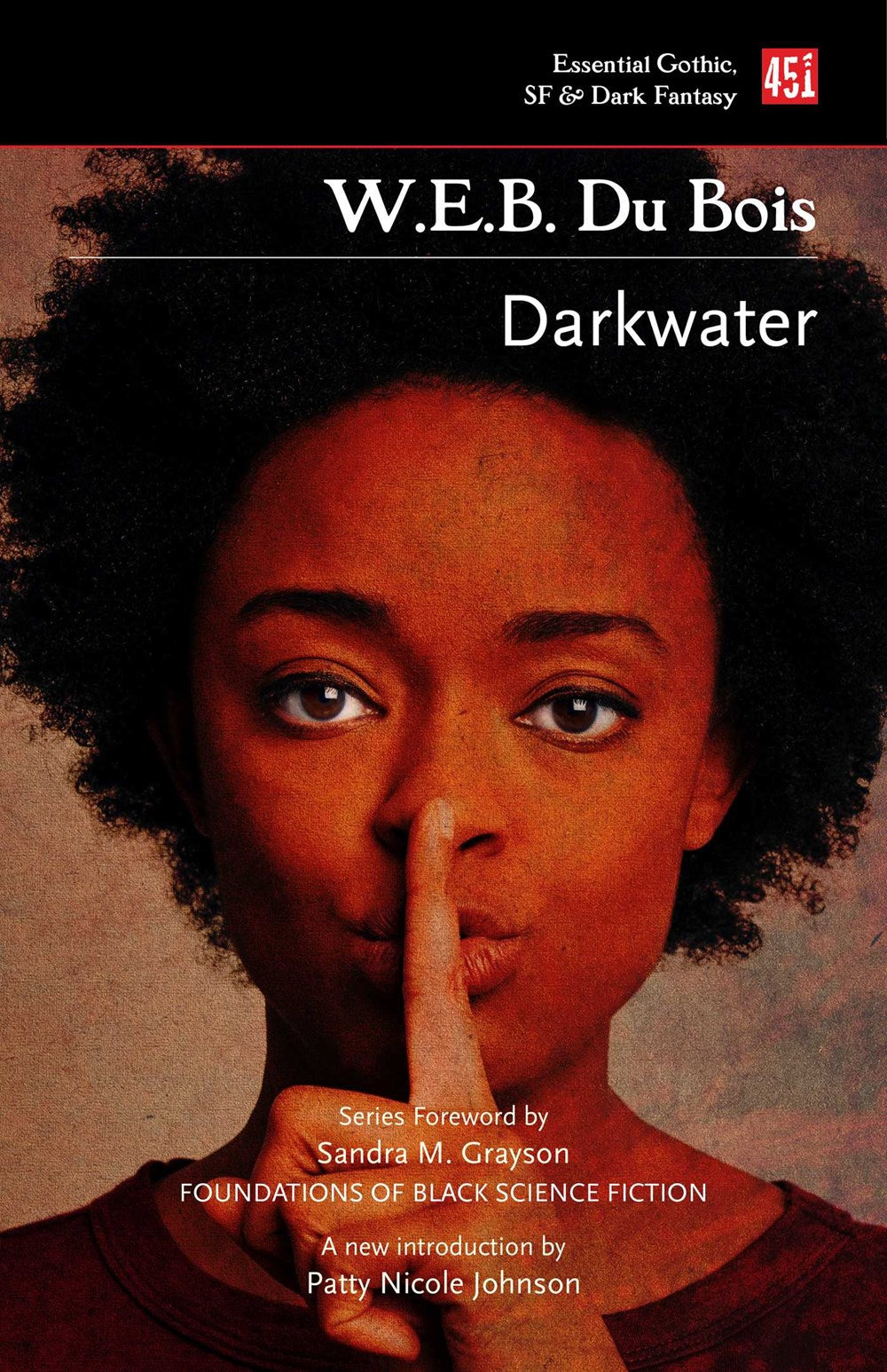
Darkwater
by W.E.B. Du Bois
$10.99Du Bois' foundational investigation of social justice and civil rights by means of essay, poetry, prayer and short science fiction.
A new edition with a new introduction, Du Bois' radical text is a rare statement of values formed around the vision of a collective life, where the humanity of black women and men is treated with dignity and equality. He expresses his themes through a series of literary forms: polemic essay, spirituals, poetry and short science fiction, each of which forms a pulse of social justice from a time when a true understanding of intersections between poverty, work, racism and feminism was rare. A new title in the Foundations of Black Science Fiction series. -
African American Environmental Thought: Foundations (American Political Thought)
![African American Environmental Thought: Foundations (American Political Thought) cover image]()

African American Environmental Thought: Foundations (American Political Thought)
$29.99Choice Outstanding Book
African American intellectual thought has long provided a touchstone for national politics and civil rights, but, as Kimberly Smith reveals, it also has much to say about our relationship to nature. In this first singleauthored book to link African American and environmental studies, Smith uncovers a rich tradition stretching from the abolition movement through the Harlem Renaissance, demonstrating that black Americans have been far from indifferent to environmental concerns.
Beginning with environmental critiques of slave agriculture in the early nineteenth century and evolving through critical engagements with scientific racism, artistic primitivism, pragmatism, and twentiethcentury urban reform, Smith highlights the continuity of twentiethcentury black politics with earlier efforts by slaves and freedmen to possess the land. She examines the works of such canonical figures as Frederick Douglass, Booker T. Washington, W. E. B. Du Bois, and Alain Locke, all of whom wrote forcefully about how slavery and racial oppression affected black Americans' relationship to the environment
Smith's analysis focuses on the importance of freedom in humans' relationship with nature. According to black theorists, the denial of freedom can distort one's relationship to the natural world, impairing stewardship and alienating one from the land. Her pathbreaking study offers the first linkage of the early conservation movement to black history, the first detailed description of black agrarianism, and the first analysis of scientific racism as an environmental theory. It also offers a new way to conceptualize black politics by bringing into view its environmental dimension, as well as a normative environmental theory grounded in pragmatism and aimed at identifying the social conditions for environmental virtue.
Smith's work offers a new approach to established writers and thinkers and shows that they justly deserve a place in the canon of American environmental thought. African American Environmental Thought enriches our understanding of black politics and environmental history, and of environmental theory in general. Because slavery and racism have shaped the meaning of the American landscape, this body of thought offers us fresh conceptual resources by which we can make better sense of our world.
-
Practicing New Worlds: Abolition and Emergent Strategies
![Practicing New Worlds: Abolition and Emergent Strategies]()
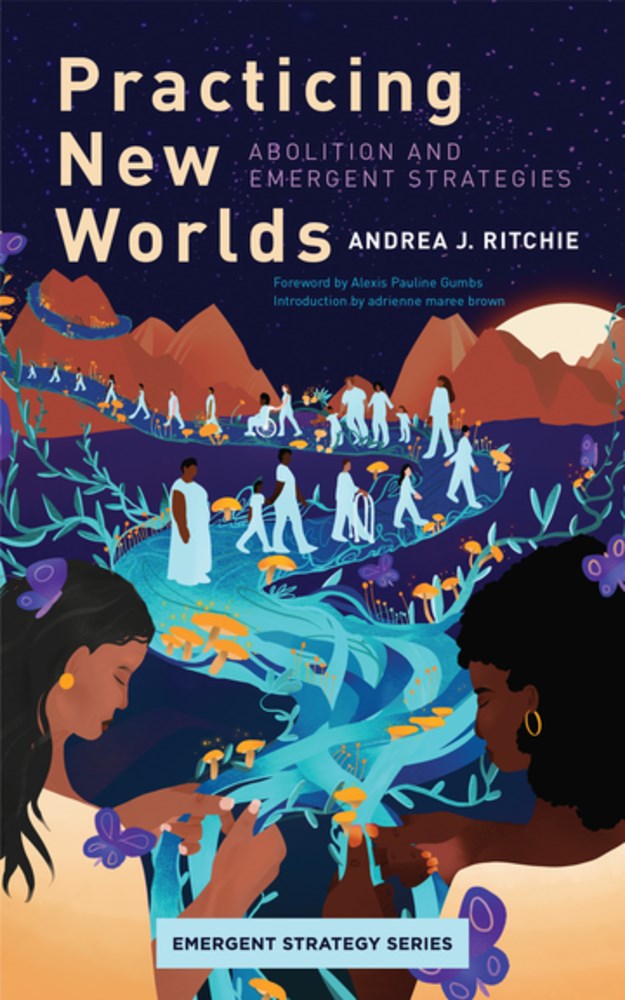
Practicing New Worlds: Abolition and Emergent Strategies
by Andrea Ritchie & Alexis Pauline Gumbs
$22.00An exploration of how emergent strategies can help us meet this moment, survive what is to come, and shape safer and more just futures.
Practicing New Worlds explores how principles of emergence, adaptation, iteration, resilience, transformation, interdependence, decentralization and fractalization can shape organizing toward a world without the violence of surveillance, police, prisons, jails, or cages of any kind, in which we collectively have everything we need to survive and thrive.
Drawing on decades of experience as an abolitionist organizer, policy advocate, and litigator in movements for racial, gender, economic, and environmental justice and the principles articulated by adrienne maree brown in Emergent Strategy: Shaping Change, Changing Worlds, Ritchie invites us to think beyond traditional legislative and policy change to create more possibilities for survival and resistance in the midst of the ongoing catastrophes of racial capitalism—and the cataclysms to come. Rooted in analysis of current abolitionist practices and interviews with on-the-ground organizers resisting state violence, building networks to support people in need of abortion care, and nurturing organizations and convergences that can grow transformative cities and movements, Practicing New Worlds takes readers on a journey of learning, unlearning, experimentation, and imagination to dream the worlds we long for into being.


Stay Informed. We're building a community committed to celebrating Black authors + artisans. Subscribe to keep up with all things Kindred Stories.