
Search results: 20 results for “by Henry Louis Gates Jr.”
Not finding what you're looking for? Check out our shop on bookshop.org to order and still support us ♥
20 results
-
Black in Latin America
![Black in Latin America]()
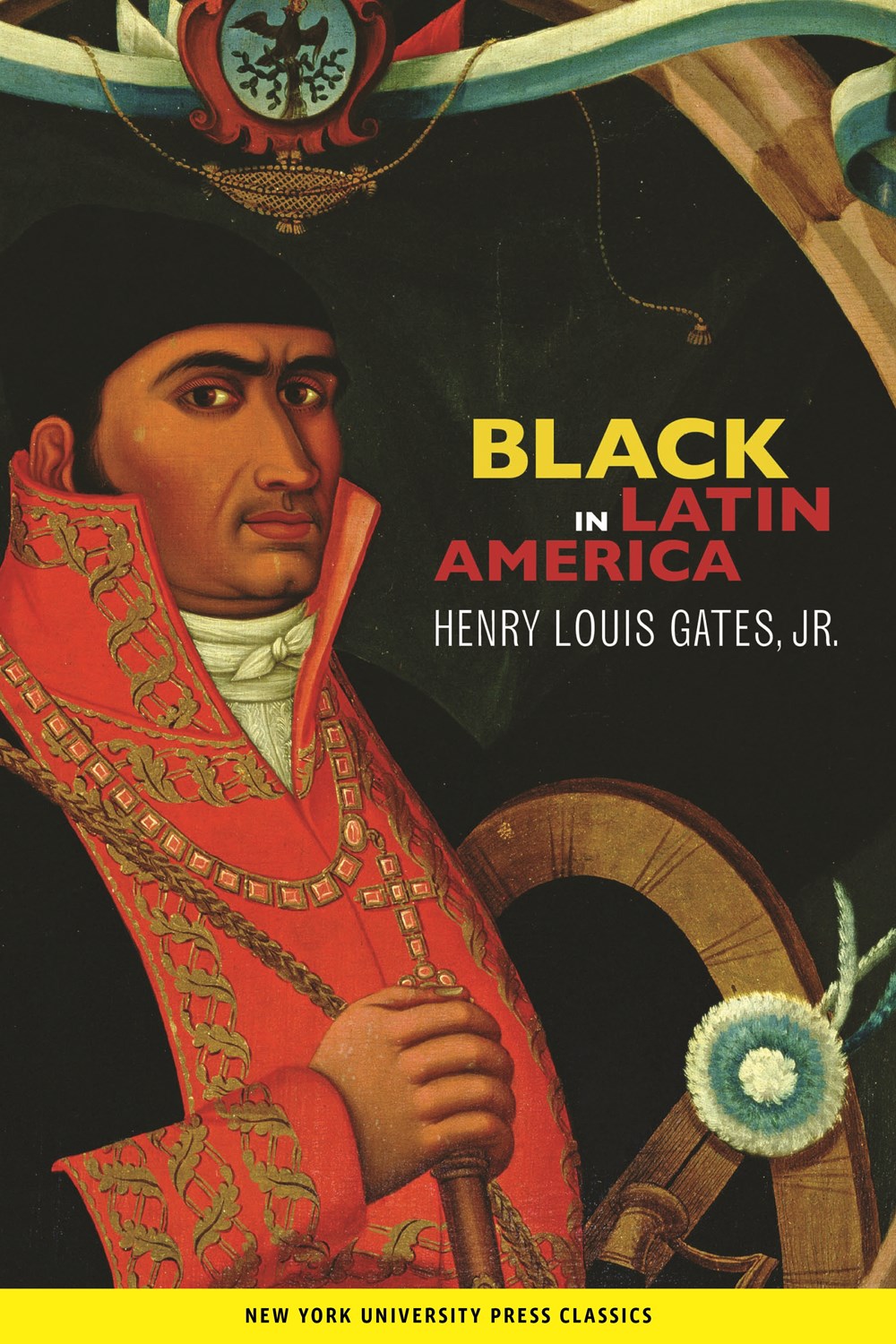
Black in Latin America
by Henry Louis Gates Jr.
$34.00The history of how six Latin American countries acknowledge—or deny—their African past
12.5 million Africans were shipped to the New World during the Middle Passage. While just over 11.0 million survived the arduous journey, only about 450,000 of them arrived in the United States. The rest—over ten and a half million—were taken to the Caribbean and Latin America. This astonishing fact changes our entire picture of the history of slavery in the Western hemisphere, and of its lasting cultural impact. These millions of Africans created new and vibrant cultures, magnificently compelling syntheses of various African, English, French, Portuguese, and Spanish influences.
Despite their great numbers, the cultural and social worlds that they created remain largely unknown to most Americans, except for certain popular, cross-over musical forms. So Henry Louis Gates, Jr. set out on a quest to discover how Latin Americans of African descent live now, and how the countries acknowledge—or deny—their African past; how the fact of race and African ancestry play themselves out in the multicultural worlds of the Caribbean and Latin America. Starting with the slave experience and extending to the present, Gates unveils the history of the African presence in six Latin American countries—Brazil, Cuba, the Dominican Republic, Haiti, Mexico, and Peru—through art, music, cuisine, dance, politics, and religion, but also the very palpable presence of anti-black racism that has sometimes sought to keep the black cultural presence from view.
In Brazil, he delves behind the façade of Carnaval to discover how this ‘rainbow nation’ is waking up to its legacy as the world’s largest slave economy.
In Cuba, he finds out how the culture, religion, politics and music of this island is inextricably linked to the huge amount of slave labor imported to produce its enormously profitable 19th century sugar industry, and how race and racism have fared since Fidel Castro’s Communist revolution in 1959.
In Haiti, he tells the story of the birth of the first-ever black republic, and finds out how the slaves’s hard fought liberation over Napoleon Bonaparte’s French Empire became a double-edged sword.
In Mexico and Peru, he explores the almost unknown history of the significant numbers of black people—far greater than the number brought to the United States—brought to these countries as early as the sixteenth and seventeenth centuries, and the worlds of culture that their descendants have created in Vera Cruz on the Gulf of Mexico, the Costa Chica region on the Pacific, and in and around Lima, Peru.
Professor Gates’ journey becomes ours as we are introduced to the faces and voices of the descendants of the Africans who created these worlds. He shows both the similarities and distinctions between these cultures, and how the New World manifestations are rooted in, but distinct from, their African antecedents. “Black in Latin America” is the third instalment of Gates’s documentary trilogy on the Black Experience in Africa, the United States, and in Latin America. In America Behind the Color Line, Professor Gates examined the fortunes of the black population of modern-day America. In Wonders of the African World, he embarked upon a series of journeys to reveal the history of African culture. Now, he brings that quest full-circle in an effort to discover how Africa and Europe combined to create the vibrant cultures of Latin America, with a rich legacy of thoughtful, articulate subjects whose stories are astonishingly moving and irresistibly compelling. -
The Black Church: This Is Our Story, This Is Our Song
![The Black Church: This Is Our Story, This Is Our Song cover image]()

The Black Church: This Is Our Story, This Is Our Song
$20.00The instant New York Times bestseller and companion book to the PBS series.
“Absolutely brilliant . . . A necessary and moving work.” —Eddie S. Glaude, Jr., author of Begin Again
“Engaging. . . . In Gates’s telling, the Black church shines bright even as the nation itself moves uncertainly through the gloaming, seeking justice on earth—as it is in heaven.” —Jon Meacham, New York Times Book Review
From the New York Times bestselling author of Stony the Road and The Black Box,and one of our most important voices on the African American experience, comes a powerful new history of the Black church as a foundation of Black life and a driving force in the larger freedom struggle in America.
For the young Henry Louis Gates, Jr., growing up in a small, residentially segregated West Virginia town, the church was a center of gravity—an intimate place where voices rose up in song and neighbors gathered to celebrate life's blessings and offer comfort amid its trials and tribulations. In this tender and expansive reckoning with the meaning of the Black Church in America, Gates takes us on a journey spanning more than five centuries, from the intersection of Christianity and the transatlantic slave trade to today’s political landscape. At road’s end, and after Gates’s distinctive meditation on the churches of his childhood, we emerge with a new understanding of the importance of African American religion to the larger national narrative—as a center of resistance to slavery and white supremacy, as a magnet for political mobilization, as an incubator of musical and oratorical talent that would transform the culture, and as a crucible for working through the Black community’s most critical personal and social issues.
In a country that has historically afforded its citizens from the African diaspora tragically few safe spaces, the Black Church has always been more than a sanctuary. This fact was never lost on white supremacists: from the earliest days of slavery, when enslaved people were allowed to worship at all, their meetinghouses were subject to surveillance and destruction. Long after slavery’s formal eradication, church burnings and bombings by anti-Black racists continued, a hallmark of the violent effort to suppress the African American struggle for equality. The past often isn’t even past—Dylann Roof committed his slaughter in the Mother Emanuel AME Church 193 years after it was first burned down by white citizens of Charleston, South Carolina, following a thwarted slave rebellion.
But as Gates brilliantly shows, the Black church has never been only one thing. Its story lies at the heart of the Black political struggle, and it has produced many of the Black community’s most notable leaders. At the same time, some churches and denominations have eschewed political engagement and exemplified practices of exclusion and intolerance that have caused polarization and pain. Those tensions remain today, as a rising generation demands freedom and dignity for all within and beyond their communities, regardless of race, sex, or gender. Still, as a source of faith and refuge, spiritual sustenance and struggle against society’s darkest forces, the Black Church has been central, as this enthralling history makes vividly clear.
-
The Classic Slave Narratives
![The Classic Slave Narratives]()
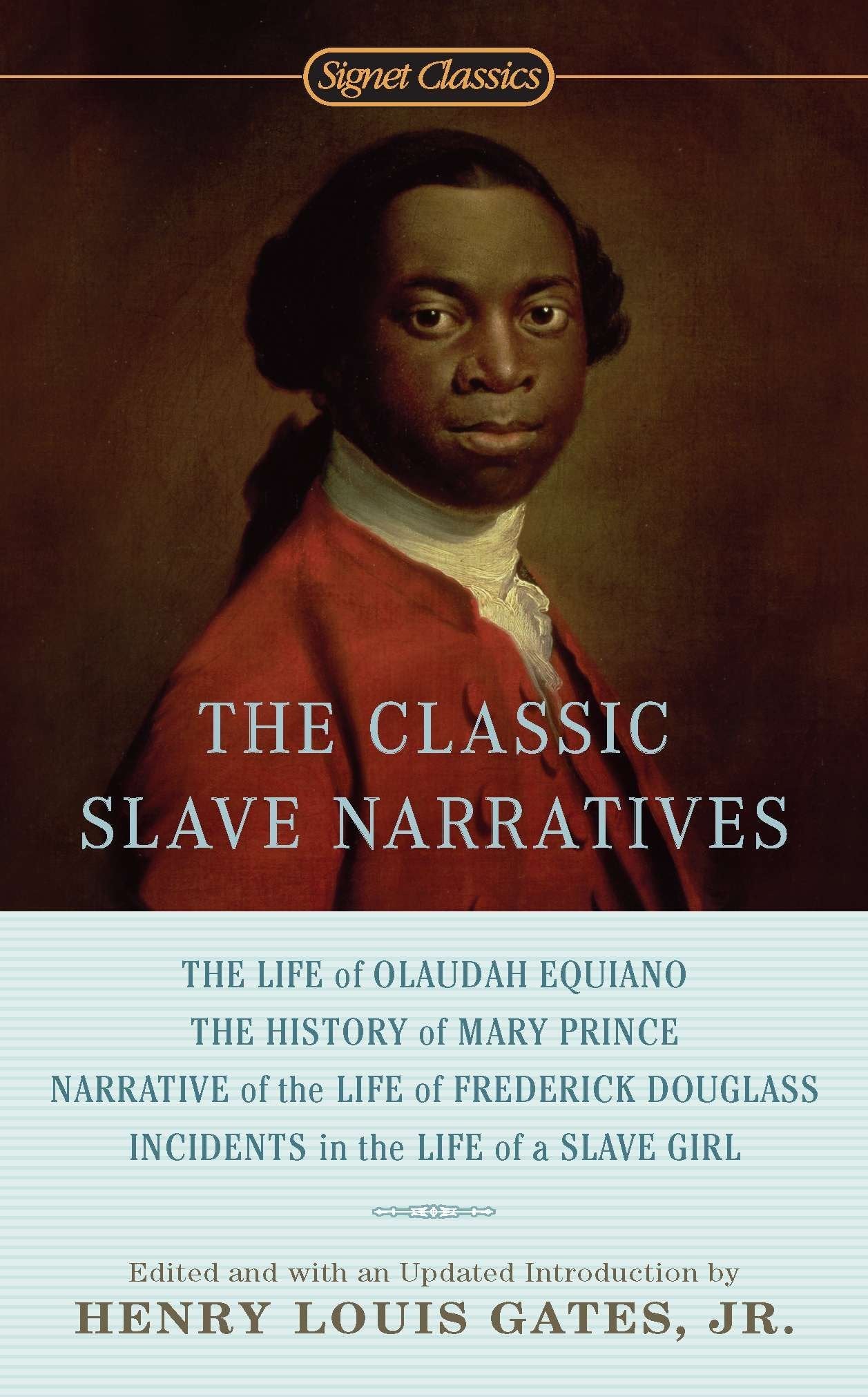
The Classic Slave Narratives
edited by Henry Louis Gates, Jr.
$7.95A seminal volume of four classic slave narratives, including Narrative of the Life of Frederick Douglass, The History of Mary Price: A West Indian Slave, Incident in the Life of a Slave Girl, and The Life of Olaudah Equiano.
Before the end of the Civil War, more than one hundred former slaves had published moving stories of their captivity and escape, joined by a similar number after the war. No group of slaves anywhere, in any other era, has left such prolific testimony to the horror of bondage and servitude.
Henry Louis Gates, Jr., one of America's top experts in African American studies, presents four of these classic narratives that illustrate the real nature of black experience in slavery.
Fascinating and powerful, this collection includes four of the best-known examples: the lives of Frederick Douglass, Harriet Jacobs (alias Linda Brent), Mary Price, and Olaudah Equiano (alias Gustavus Vassa). These amazing stories are not only first-person histories of the highest caliber, they are also a unique literary form that has given birth to the spirit, vitality, and vision of America's modern black writers.
Updated with the ninth edition of The Life of Olaudah Equiano, the last edition he revised and published in his lifetime.
With a Revised and Updated Introduction by Henry Louis Gates, Jr. -
Our Nig: or, Sketches from the Life of a Free Black
![Our Nig: or, Sketches from the Life of a Free Black cover image]()

Our Nig: or, Sketches from the Life of a Free Black
Harriet E. Wilson
$16.95With a New Introduction and Notes by Henry Louis Gates, Jr. and Richard J. Ellis
A fascinating fusion of two literary models of the nineteenth century, the sentimental novel and the slave narrative, Our Nig, apart from its historical significance, is a deeply ironic and highly readable work, tracing the trials and tribulations of Frado, a mulatto girl abandoned by her white mother after the death of the child's black father, who grows up as an indentured servant to a white family in nineteenth-century Massachusetts.
This definitive edition of Our Nig includes a new Introduction by Henry Louis Gates, Jr. and Richard J. Ellis and a set of appendices: "Harriet Wilson's Career as a Spiritualist"; "Hattie E. Wilson in the Banner of Light and Spiritual Scientist" a collection of her extant contributions to these newspapers; "Documents from Harriet Wilson's Life in Boston," and a compilation of primary source material relating to Wilson's identity. There is also a new chronology of the life of Harriet Wilson by Richard J. Ellis, as well as an up-to-date Select Bibliography of current scholarship regarding Harriet Wilson. This edition gives the fullest account to date of the life of Harriet Wilson, filling out many critical points regarding her life after writing Our Nig, in particular when she became a "medium" who communicated with the dead and as an educator in the "Spiritualist" movement after the Civil War.
-
We Are the Leaders We Have Been Looking For (The W. E. B. Du Bois Lectures)
![Book cover image]()
We Are the Leaders We Have Been Looking For (The W. E. B. Du Bois Lectures)
from $18.95From the author of the New York Times bestseller Begin Again, a politically astute, lyrical meditation on how ordinary people can shake off their reliance on a small group of professional politicians and assume responsibility for what it takes to achieve a more just and perfect democracy.
“Like attending a jazz concert with all of one’s favorite musicians…James Baldwin, Martin Luther King, Jr., Malcolm X, Ella Baker, Toni Morrison, and more…Glaude brilliantly takes us on an epic tour through their lives and work.”
―Henry Louis Gates, Jr., author of The Black Box: Writing the RaceWe are more than the circumstances of our lives, and what we do matters. In We Are the Leaders We Have Been Looking For, one of the nation’s preeminent scholars and a New York Times bestselling author, Eddie S. Glaude Jr., makes the case that the hard work of becoming a better person should be a critical feature of Black politics. Through virtuoso interpretations of Martin Luther King, Jr., Malcolm X, and Ella Baker, Glaude shows how we have the power to be the heroes that our democracy so desperately requires.
Based on the Du Bois Lectures delivered at Harvard University, the book begins with Glaude’s unease with the Obama years. He felt then, and does even more urgently now, that the excitement around the Obama presidency constrained our politics as we turned to yet another prophet-like figure. He examines his personal history and the traditions that both shape and overwhelm his own voice.
Glaude weaves anecdotes about his evolving views on Black politics together with the writings of Ralph Waldo Emerson, John Dewey, Toni Morrison, James Baldwin, and Ralph Ellison, encouraging us to reflect on the lessons of these great thinkers and address imaginatively the challenges of our day in voices uniquely our own.
Narrated with passion and philosophical intensity, this book is a powerful reminder that if American democracy is to survive, we must step out from under the shadows of past giants to build a better society―one that derives its strength from the pew, not the pulpit.
-
Children of Fire: A History of African Americans
![Children of Fire: A History of African Americans]()
Children of Fire: A History of African Americans
by Thomas C. Holt
$30.00*ships in 7 - 10 business days*"The first survey of African American history to rival From Slavery to Freedom." —Henry Louis Gates, Jr.Ordinary people don't experience history as it is taught by historians. They live across the convenient chronological divides we impose on the past. The same people who lived through the Civil War and the eradication of slavery also dealt with the hardships of Reconstruction, so why do we almost always treat them separately? In this groundbreaking new book, renowned historian Thomas C. Holt challenges this form to tell the story of generations of African Americans through the lived experience of the subjects themselves, with all of the nuances, ironies, contradictions, and complexities one might expect.
-
The Portable Frederick Douglass (Penguin Classics)
![The Portable Frederick Douglass (Penguin Classics) cover image]()

The Portable Frederick Douglass (Penguin Classics)
Frederick Douglass
$25.00A new collection of the seminal writings and speeches of a legendary writer, orator, and civil rights leader
This compact volume offers a full course on the remarkable, diverse career of Frederick Douglass, letting us hear once more a necessary historical figure whose guiding voice is needed now as urgently as ever. Edited by renowned scholar Henry Louis Gates, Jr., and Pulitzer Prize–nominated historian John Stauffer, The Portable Frederick Douglass includes the full range of Douglass’s works: the complete Narrative of the Life of Frederick Douglass, as well as extracts from My Bondage and My Freedom and Life and Times of Frederick Douglass; The Heroic Slave, one of the first works of African American fiction; the brilliant speeches that launched his political career and that constitute the greatest oratory of the Civil War era; and his journalism, which ranges from cultural and political critique (including his early support for women’s equality) to law, history, philosophy, literature, art, and international affairs, including a never-before-published essay on Haitian revolutionary Toussaint L’Ouverture.
The Portable Frederick Douglass is the latest addition in a series of African American classics curated by Henry Louis Gates, Jr. First published in 2008, the series reflects a selection of great works of fiction, nonfiction, and poetry by African and African American authors introduced and annotated by leading scholars and acclaimed writers in new or updated editions for Penguin Classics. In his series essay, “What Is an African American Classic?” Gates provides a broader view of the canon of classics of African American literature available from Penguin Classics and beyond. Gates writes, “These texts reveal the human universal through the African American particular: all true art, all classics do this; this is what ‘art’ is, a revelation of that which makes each of us sublimely human, rendered in the minute details of the actions and thoughts and feelings of a compelling character embedded in a time and place.”
For more than seventy years, Penguin has been the leading publisher of classic literature in the English-speaking world. With more than 1,700 titles, Penguin Classics represents a global bookshelf of the best works throughout history and across genres and disciplines. Readers trust the series to provide authoritative texts enhanced by introductions and notes by distinguished scholars and contemporary authors, as well as up-to-date translations by award-winning translators. -
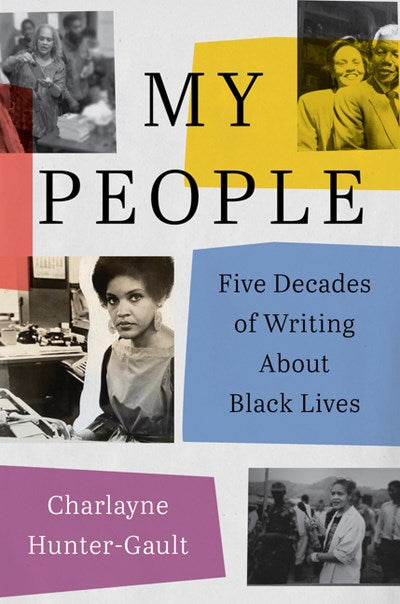
My People : Five Decades of Writing About Black Lives
![My People : Five Decades of Writing About Black Lives]()
My People : Five Decades of Writing About Black Lives
by Charlayne Hunter-Gault
$21.99*Ships/ready for pick up in 5-8 business days*
From a legendary Emmy Award–winning journalist comes a collection of ground-breaking reportage from across five decades, vividly chronicling the experience of Black life in America yesterday and today.
“Charlayne Hunter-Gault is that rarest of historical figures. . . . The essays collected here affirm her status as one of the most consistently original, insightful, and passionate interpreters of both American and African society, politics, and culture. Her thoughtful reflections, delightfully written and deeply engaging, are a testament both to her unique position in the history of journalism and to her status as an acute and keen commentator, reminding us how and why ‘race matters.’ This book is a must-read for all students of race in our times.”—Henry Louis Gates, Jr.
At just eighteen years old, in January 1961, Charlayne Hunter-Gault made national news when she mounted a successful legal challenge that culminated in her admission to the University of Georgia—making her one of the first two Black students to integrate the institution. As an adult, Charlayne switched from being the subject of news to covering it, becoming one of its most recognized and acclaimed interpreters.
Over more than five decades, this dedicated reporter charted a course through some of the world’s most respected journalistic institutions, including the New Yorker and the New York Times, where she was often the only Black woman in the newsroom. Throughout her storied career, Charlayne has chronicled the lives of Black people in America—shining a light on their experiences and giving a glimpse into their community as never before.
My People showcases Charlayne’s lifelong commitment to reporting on Black people in their totality, “in ways that are recognizable to themselves.” Spanning from the civil rights movement through the election and inauguration of America’s first Black president and beyond, this invaluable collection shows the breadth and nuance of the Black experience through the trials, tragedies, and triumphs of everyday lives.
-
The Portable Nineteenth-Century African American Women Writers (Penguin Classics)
![The Portable Nineteenth-Century African American Women Writers (Penguin Classics) cover image]()

The Portable Nineteenth-Century African American Women Writers (Penguin Classics)
Hollis Robbins
$24.00A landmark collection documenting the social, political, and artistic lives of African American women throughout the tumultuous nineteenth century. Named one of NPR's Best Books of 2017.
The Portable Nineteenth-Century African American Women Writers is the most comprehensive anthology of its kind: an extraordinary range of voices offering the expressions of African American women in print before, during, and after the Civil War. Edited by Hollis Robbins and Henry Louis Gates, Jr., this collection comprises work from forty-nine writers arranged into sections of memoir, poetry, and essays on feminism, education, and the legacy of African American women writers. Many of these pieces engage with social movements like abolition, women’s suffrage, temperance, and civil rights, but the thematic center is the intellect and personal ambition of African American women. The diverse selection includes well-known writers like Sojourner Truth, Hannah Crafts, and Harriet Jacobs, as well as lesser-known writers like Ella Sheppard, who offers a firsthand account of life in the world-famous Fisk Jubilee Singers. Taken together, these incredible works insist that the writing of African American women writers be read, remembered, and addressed.
For more than seventy years, Penguin has been the leading publisher of classic literature in the English-speaking world. With more than 1,700 titles, Penguin Classics represents a global bookshelf of the best works throughout history and across genres and disciplines. Readers trust the series to provide authoritative texts enhanced by introductions and notes by distinguished scholars and contemporary authors, as well as up-to-date translations by award-winning translators. -
Native Son American Classics Edition: A Novel (HarperCollins American Classics)
![Native Son American Classics Edition: A Novel (HarperCollins American Classics) cover image]()

Native Son American Classics Edition: A Novel (HarperCollins American Classics)
$20.00One of The Atlantic’s Great American Novels
“If one had to identify the single most influential shaping force in modern Black literary history, one would probably have to point to Wright and the publication of Native Son.” – Henry Louis Gates Jr.
In celebration of the 250th anniversary of the United States, HarperCollins is proud to present this library of American classics drawn from our storied catalog. When it was first published in 1940, Native Son established Richard Wright as a literary star. In the decades since, Wright's masterpiece—hailed as "a novel of tremendous power and beauty" (Newsweek)—has become a revered classic that remains as timely and relevant today as when it first appeared.
Set in Chicago in the 1930s, Native Son is the story of Bigger Thomas, a young Black man caught in a downward spiral after killing a young white woman in a brief moment of panic. Written with the distinctive rhythm of a modern crime story, this formidable work is both a condemnation of social injustice and an unsparing portrait of the Black experience in America, revealing the tragic effect of poverty, racism, and hopelessness on the human spirit. As Wright explained, "I wrote Native Son to show what manner of men and women our 'society of the majority' breeds, and my aim was to depict a character in terms of the living tissue and texture of daily consciousness."
This edition of Native Son isthe restored text established by the Library of America—the novel as Wright intended it to be published. It also includes an essay by Wright titled, How "Bigger" was Born, along with notes on the text.
-
Mahalia Jackson, Moving On Up a Little Higher: The Story of an American Civil Rights Pioneer
![Mahalia Jackson, Moving On Up a Little Higher: The Story of an American Civil Rights Pioneer cover image]()

Mahalia Jackson, Moving On Up a Little Higher: The Story of an American Civil Rights Pioneer
$28.99“Mahalia Jackson was the greatest gospel singer of her time and an overlooked leader in the Civil Rights Movement. Her voice seemed born of heaven.” ?Henry Louis Gates Jr.
If Americans today still recognize the name Mahalia Jackson, they might recall that she was perhaps the greatest gospel singer who ever lived. But for many people, there is no awareness at all, not even for an entertainer whose “Move On Up a Little Higher” sold eight million copies, who headlined two Newport Jazz Festivals and performed before four United States presidents.
While this rich musical legacy is admired by those in the know, virtually no one recognizes Jackson’s astonishing role in American civil rights history. In this startling new depiction of the renowned gospel singer, New York Times best-selling author Timothy B. Tyson and Mary D. Williams, an acclaimed gospel singer herself, bring Jackson back to soaring life by positioning her as the major civil rights figure she, in fact, was.
Mahlia Jackson, Moving On Up a Little Higher then traces Jackson’s career from abject poverty in New Orleans to global superstardom, revealing how even after meteoric success, Jackson maintained an unwavering devotion to Black freedom. In the 1930s in Chicago, even before the Civil Rights Movement took its modern shape, she used her rapturous voice to support independent Black political power. Her work only intensified in the 1940s and beyond when she campaigned first for Franklin D. Roosevelt, and later for Harry Truman, John F. Kennedy, and Lyndon B. Johnson; headlined in Montgomery for the 1955–56 bus boycott; sang for the Birmingham campaign and on the Selma March; and performed at the iconic 1963 March on Washington, where she urged Martin Luther King Jr. to “Tell ’em about the dream.” In retrospect what becomes historically significant is that Mahalia Jackson was present at so many civil rights events, even singing a divine rendition of “Precious Lord, Take My Hand,” at Dr. King’s funeral in 1968. Weakened and worn, she succumbed to heart failure four years later at the age of sixty.
Weaving together Mahalia Jackson’s inspiring life journey with her soulful music into a transcendent text, this biography ultimately casts Mahalia Jackson as we’ve never seen her before, as a guiding light for the Civil Rights Movement, whose message still speaks to our struggles today.
5 illustrations
-
Black Studies in the University: A Symposium
![Black Studies in the University: A Symposium cover image]()

Black Studies in the University: A Symposium
$22.00A founding document of African American Studies, reissued for today’s students and scholars
In a landmark 1968 conference at Yale University, students, faculty, and community activists helped establish “Afro‑American Studies” as a major, and then a thriving department, at Yale. In these conference proceedings, participants argue for the necessity of Black Studies as a field, start to delineate its central debates, discuss its relationship to the broader community, and plot a course of study. Bristling with implied action and the power of an idea whose time has come, this classic reissue will serve as a resource for new generations of scholars and activists.
Contributors to the proceedings include McGeorge Bundy, Lawrence W. Chisolm, Harold Cruse, David Brion Davis, Nathan Hare, Maulana Ron Karenga, Martin Kilson, Jr., Gerald A. McWorter, Sidney W. Mintz, Boniface Obichere, Alvin Poussaint, Edwin S. Redkey, Charles H. Taylor, Jr., and Robert Farris Thompson.
In a new introduction, Farah Jasmine Griffin reflects on the legacy of this book and the trajectory of the field over the decades; forewords by Ralph C. Dawson and Henry Louis Gates, Jr., recall the pioneering moment at Yale and all that it made possible.


Stay Informed. We're building a community committed to celebrating Black authors + artisans. Subscribe to keep up with all things Kindred Stories.