
Search results: 14 results for “Barry Jenkins”
Not finding what you're looking for? Check out our shop on bookshop.org to order and still support us ♥
14 results
-
The 1619 Project: A New Origin Story
![The 1619 Project: A New Origin Story]()
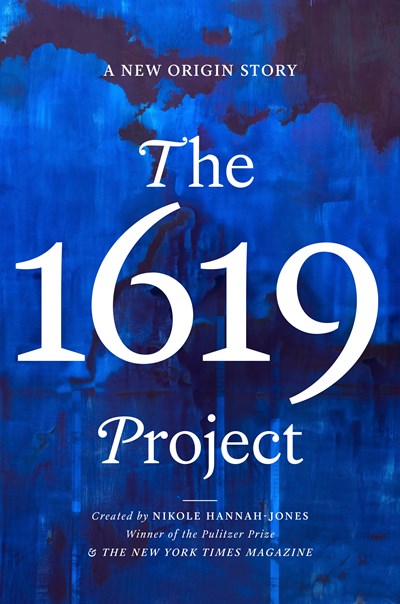
The 1619 Project: A New Origin Story
by Nikole Hannah-Jones
from $25.00One World is proud to present THE 1619 PROJECT: A New Origin Story, a book that dramatically builds on the vision of the original magazine project with major expansions of the original essays, seven new essays by historians, and dozens of new poems and pieces of fiction. The book includes a significant elaboration of the project’s Pulitzer Prize-winning lead essay by Nikole Hannah-Jones and a new introduction that together offer a stirring rebuttal to critics. Hannah-Jones has also written a third essay that makes the case for reparative solutions to the legacy of injustice the project documents.
Edited by Hannah-Jones, along with New York Times Magazine editor-in-chief Jake Silverstein, features editor Ilena Silverman, and New York Times executive producer Caitlin Roper, the book offers work from some of the country’s most outstanding journalists, thinkers, historians and scholars, including: Michelle Alexander, Leslie Alexander, Carol Anderson, Jamelle Bouie, Anthea Butler, Matthew Desmond, Martha Jones, Ibram Kendi, Kevin Kruse, Trymaine Lee, Tiya Miles, Wesley Morris, Khalil Gibran Muhammad, Dorothy Roberts, Jeneen Interlandi, Bryan Stevenson, and Linda Villarosa.
Woven throughout the book are works of fiction and poetry that bring to life four hundred years of history with imaginative writing by Joshua Bennett, Reginald Dwayne Betts, Rita Dove, Camille Dungy, Cornelius Eady, Eve L. Ewing, Nikky Finney, Vievee Francis, Yaa Gyasi, Forrest Hamer, Terrance Hayes, Honorée Fanonne Jeffers, Barry Jenkins, Tyehimba Jess, Robert Jones, Jr., A. Van Jordan, Yusef Komunyakaa, Kiese Laymon, Jasmine Mans, Terry McMillan, Lynn Nottage, ZZ Packer, Gregory Pardlo, Darryl Pinckney, Claudia Rankine, Jason Reynolds, Evie Shockley, Tim Siebles, Clint Smith, Danez Smith, Patricia Smith, Tracy K. Smith, Nafissa Thompson-Spires, Natasha Trethewey, Jesmyn Ward and Sonia Sanchez.
The book also includes archival portrait photography of Black Americans paired with each essay, curated by Kimberly Annece Henderson.
-
The Underground Railroad: A Novel
![The Underground Railroad: A Novel]()
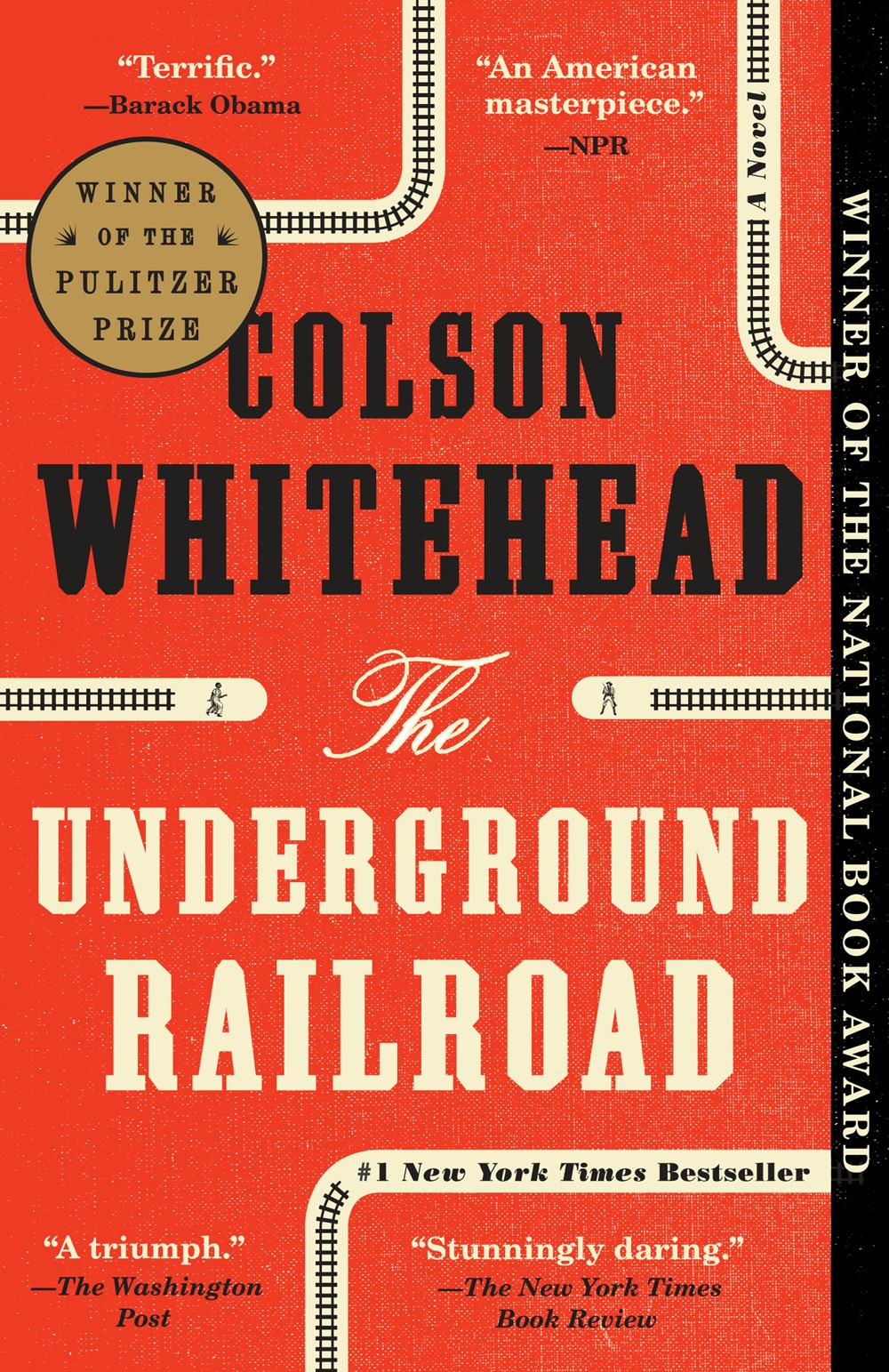
The Underground Railroad: A Novel
by Colson Whitehead
$16.95Winner of the Pulitzer Prize and the National Book Award, this #1 New York Times bestseller chronicles a young slave's adventures as she makes a desperate bid for freedom in the antebellum South. The basis for the acclaimed original Amazon Prime Video series directed by Barry Jenkins.
Cora is a slave on a cotton plantation in Georgia. An outcast even among her fellow Africans, she is on the cusp of womanhood—where greater pain awaits. And so when Caesar, a slave who has recently arrived from Virginia, urges her to join him on the Underground Railroad, she seizes the opportunity and escapes with him.
In Colson Whitehead's ingenious conception, the Underground Railroad is no mere metaphor: engineers and conductors operate a secret network of actual tracks and tunnels beneath the Southern soil. Cora embarks on a harrowing flight from one state to the next, encountering, like Gulliver, strange yet familiar iterations of her own world at each stop.
As Whitehead brilliantly re-creates the terrors of the antebellum era, he weaves in the saga of our nation, from the brutal abduction of Africans to the unfulfilled promises of the present day. The Underground Railroad is both the gripping tale of one woman's will to escape the horrors of bondage—and a powerful meditation on the history we all share.
Look for Colson Whitehead’s bestselling new novel, Harlem Shuffle! -
Regeneration: Black Cinema, 1898–1971
![Regeneration: Black Cinema, 1898–1971]()
Regeneration: Black Cinema, 1898–1971
edited by Doris Berger, Rhea L. Combs, & Whoopi Goldberg
$49.95The overlooked yet vibrant history of Black participation in American film, from the beginning of cinema through the civil rights movement
From the dawn of the medium onward, Black filmmakers have helped define American cinema. Black performers, producers and directors—Bert Williams, Oscar Micheaux, Herb Jeffries, Lena Horne, Dorothy Dandridge, Ruby Dee and William Greaves, to name just a few—had a vast and resounding impact. Black film artists not only developed an enduring independent tradition but also transformed mainstream Hollywood, fueled and reflected sociopolitical movements, captured Black experience in all its robust complexity, and influenced generations to come. As harrowing as it is beautiful, this history of Black cinema and its legacy is often overlooked.
Regeneration accompanies a first-of-its-kind exhibition at the Academy Museum of Motion Pictures exploring seven decades of Black participation in American cinema. Amplifying this underrepresented history in colorful and striking detail, the book features an in-depth curatorial essay and scholarly case-study texts on topics such as early Black independent filmmaking, Black spectatorship during the Jim Crow era and home movies as an essential form of Black self-representation. The volume also makes meaningful connections to the present through interviews with award-winning contemporary Black filmmakers Charles Burnett, Julie Dash, Ava DuVernay, Barry Jenkins and Dawn Porter. An extensive filmography and chronology offer an essential resource for anyone interested in Black cinema, while images of contemporary visual artworks further illustrate the volume throughout. -
James Baldwin: Later Novels (LOA #272): Tell Me How Long the Train's Been Gone / If Beale Street Could Talk / Just Above My Head (Library of America James Baldwin Edition)
![James Baldwin: Later Novels (LOA #272): Tell Me How Long the Train's Been Gone / If Beale Street Could Talk / Just Above My Head (Library of America James Baldwin Edition) cover image]()

James Baldwin: Later Novels (LOA #272): Tell Me How Long the Train's Been Gone / If Beale Street Could Talk / Just Above My Head (Library of America James Baldwin Edition)
James Baldwin
$45.00Includes If Beale Street Could Talk, now a major motion picture directed by Barry Jenkins.
The Library of America completes its edition of the collected fiction of the literary voice of the Civil Rights era with this volume gathering three revealing later works of the 1960s and ’70s.
With such landmark novels as Go Tell It on the Mountain, Giovanni’s Room, and the essay collections Notes of a Native Son and The Fire Next Time, James Baldwin established himself as the indispensable voice of the Civil Rights era, a figure whose prophetic exploration of the racial and sexual fissures in American society raised the consciousness of American readers. But by the late 1960s and ’70s many regarded Baldwin as being out of sync with the political and social currents transforming America: too integrationist for Black Arts Movement writers and others on the Left, yet too “pessimistic” for many white readers, and as a result his later novels have never received the consideration given his earlier fiction. Sober in outlook but ambitious in scope, these works show Baldwin responding with his signature passion—for music, for justice, for life—and searching intelligence to the new realities of a rapidly changing cultural landscape, as the Movement era gives way to the age of identity politics that we still live in today. This culminating volume in the Library of America edition of his fiction illustrates how Baldwin continues to be relevant in twenty-first-century America, especially in his dramatizing of the unequal treatment of black men by the police and the justice system, his nuanced depictions of the black family, and his explorations of sexuality.
LIBRARY OF AMERICA is an independent nonprofit cultural organization founded in 1979 to preserve our nation’s literary heritage by publishing, and keeping permanently in print, America’s best and most significant writing. The Library of America series includes more than 300 volumes to date, authoritative editions that average 1,000 pages in length, feature cloth covers, sewn bindings, and ribbon markers, and are printed on premium acid-free paper that will last for centuries.
-
Film Blackness: American Cinema and the Idea of Black Film
![Book cover image]()

Film Blackness: American Cinema and the Idea of Black Film
Michael Boyce Gillespie
$26.95In Film Blackness Michael Boyce Gillespie shifts the ways we think about black film, treating it not as a category, a genre, or strictly a representation of the black experience but as a visual negotiation between film as art and the discursivity of race. Gillespie challenges expectations that black film can or should represent the reality of black life or provide answers to social problems. Instead, he frames black film alongside literature, music, art, photography, and new media, treating it as an interdisciplinary form that enacts black visual and expressive culture. Gillespie discusses the racial grotesque in Ralph Bakshi's Coonskin (1975), black performativity in Wendell B. Harris Jr.'s Chameleon Street (1989), blackness and noir in Bill Duke's Deep Cover (1992), and how place and desire impact blackness in Barry Jenkins's Medicine for Melancholy (2008). Considering how each film represents a distinct conception of the relationship between race and cinema, Gillespie recasts the idea of black film and poses new paradigms for genre, narrative, aesthetics, historiography, and intertextuality.
-
Little Stories Club: Storytime at Kindred - September 26 @ 11 AM
![Little Stories Club: Storytime at Kindred - September 26 @ 11 AM]()

Little Stories Club: Storytime at Kindred - September 26 @ 11 AM
$0.00Join us for a montly children's storytime at Kindred Stories. Each Story time will celebrate a special book and be read by a wondertful community mementer. IT also includes a story time.
Featured Book: Daisy Helps With The Dress
Featured Reader: Antonia Adams
EVENT DEETS
When: Saturday, September 26 @ 11 AM CST
Where: Kindred Stories (2310 Elgin St. Houston, TX 77004)
How:
-
RSVP ONLY to reserve your spot and let us know you are coming.
ABOUT DAISY HELPS WITH THE DRESS
When Daisy tries to help with her cousin’s wedding, her misguided assists almost ruin the big day, until she finds a way to pull the dress—and her family—together in this charming picture book by award-winning author Olugbemisola Rhuday-Perkovich.
Daisy loves helping her family and she knows the best kind of helpers never wait to be asked. That’s why she doesn’t ask before adding finishing touches to her family’s special reused, re-tried, remixed things, like a leftover broccoli topping for Auntie Fontie’s cakes or a good bath for Nana DJ’s “back-in-the-day, rusty, dusty” vintage albums—much to their chagrin.
But what Daisy wants most is to help give her cousin Simone’s recycled wedding dress a little razzle dazzle. She knows just what the vintage dress needs: a little glitter here, a few stickers there to give the dress some flair.
But Daisy’s cousin Simone and the rest of the family are not so happy with her decorations. Can Daisy make things right and help find Simone a new re-lived, re-loved wedding dress?
-
-
Moonlight Screenplay Book
![Moonlight Screenplay Book cover image]()

Moonlight Screenplay Book
Barry Jenkins
Sold outWith a foreword by Frank Ocean, Barry Jenkins’s and Tarell Alvin McCraney’s Academy Award–winning screenplay is accompanied by an essay by Hilton Als and acceptance speeches from Moonlight’s historic Oscars night.
-
The Fantasies of Future Things: A Novel
![Book cover image]()

The Fantasies of Future Things: A Novel
Doug Jones
Sold outIn this powerful debut reminiscent of Barry Jenkins’s Moonlight, two men in Atlanta reconcile their human dignity against the price of their professional ambitions working for a real estate development company displacing Black residents in preparation for the 1996 Olympics.
Daily interactions between Jacob and Daniel are a powder keg of sexual tension and uncertainty. A recent Morehouse graduate and Brooklyn transplant, Jacob fears that accepting the truth of his sexuality will disappoint the hopes his parents have for him to lead a respectable life. Grieving the death of his mother while searching for answers about a father he has never known, Daniel, an Atlanta native, has resigned himself to the reality that men who love men don’t have happy endings.
When Jacob meets Sherman, a social worker fighting for one of the families being displaced by the project, he must decide if rejecting security is worth the risk of embracing the unknown. In the midst of navigating his grief, and volatile relationship with Jacob, Daniel learns of his father’s identity. Though meeting his father could provide Daniel with the closure he has always sought, the distance between what Daniel wants and what he’s willing to do for it remains a question only he can answer.
-
The World of Black Film: A Journey Through Cinematic Blackness in 100 Films With a Foreword by John Akomfrah
![The World of Black Film: A Journey Through Cinematic Blackness in 100 Films With a Foreword by John Akomfrah cover image]()

The World of Black Film: A Journey Through Cinematic Blackness in 100 Films With a Foreword by John Akomfrah
Sold outMy Brother Ashley Clark Has Broke It Down To What Black Film Was, Is Present Day, And What The Future Might Be. BLAK IZ BLAK. YA-DIG? SHO-NUFF. Enjoy This BLAK CINEMATIC SCIENCE. - Spike Lee
This book belongs on the shelf of every film lover, every student of cinema, and everyone who believes in the transformative power of storytelling. It's a celebration, an education, and an inspiration all at once. - Julie Dash
Resonant, exciting and eye-opening - one of the best books I've read about Black cinema. - Mark Cousins
The World of Black Film is an entertaining, informed, and thought-provoking survey of important and influential Black films from around the globe. Starting with the unfinished silent comedy Lime Kiln Club Field Day (1913) and concluding with Steve McQueen's World War II epic Blitz (2024), this book takes readers on an exciting journey through an eclectic mix of classics and hidden gems spanning more than 100 years and 30 countries.
Beautifully designed and bursting with eye-catching film imagery and poster art, this is essential reading for general film fans, enthusiasts of Black cinema, educators, and students alike.
Includes a foreword by Sir John Akomfrah, CBE RA.Films and directors include:
Black Orpheus (Marcel Camus, 1959)
Black Girl (Ousmane Sembène, 1966)
Hollywood Shuffle (Robert Townsend, 1987)
Malcolm X (Spike Lee, 1992)
Belle (Amma Asante, 2013)
Timbuktu (Abderrahmane Sissako, 2015)
Moonlight (Barry Jenkins, 2016)
Black Panther (Ryan Coogler, 2018)
Saint Omer (Alice Diop, 2022)
Dahomey (Mati Diop, 2024)
Blitz (Steve McQueen, 2024) -
God Made My Face: A Collective Portrait of James Baldwin
![God Made My Face: A Collective Portrait of James Baldwin]()
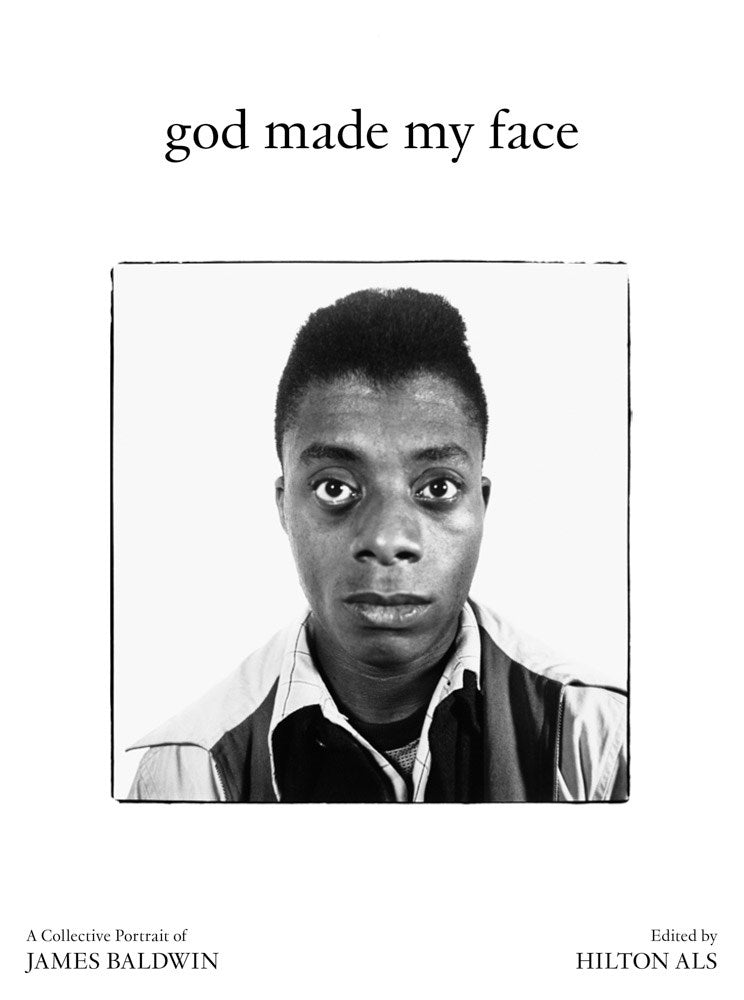
God Made My Face: A Collective Portrait of James Baldwin
edited by Hilton Als
Sold outBaldwin’s life and legacy as remembered by a pantheon of artists and writers: from Jamaica Kincaid and Barry Jenkins to Richard Avedon and Alice Neel
When author James Baldwin died in 1987, he left behind an extraordinary body of work: novels, poems, film scripts and, perhaps most indelibly, essays. A friend and supporter of Martin Luther King Jr., Malcolm X and Medgar Evers, Baldwin was a critical voice in the civil rights movement. After reaching acclaim in his early career as a writer, he struggled to retain the author’s “I,” while taking on the “we” of the people.
Edited by Pulitzer Prize–winning author Hilton Als and growing out of his landmark exhibition at David Zwirner in 2019, God Made My Face brings together an impressive assembly of contributors, ranging from Baldwin biographer David Leeming to novelist Jamaica Kincaid and Moonlight director Barry Jenkins, to create a memorial mosaic: one that not only mirrors Baldwin’s various tones but also closely examines his singular contributions to cinema, theater, the essay and Black American critical studies. These essays are illustrated by artwork from modern and contemporary artists who were either personal contemporaries of Baldwin or directly inspired by his work. In each piece assembled here, the authors speak from a personal, informed perspective, illuminating Baldwin’s deeply anguished and enlightened voice and his belief that, ultimately—because we are human—we share the potential to love, connect and live together in all our glory.
Artists include: Diane Arbus, Eugène Atget, Richard Avedon, Don Bachardy, Alvin Baltrop, Anthony Barboza, Njideka Akunyili Crosby, Beauford Delaney, Marlene Dumas, Glenn Ligon, George McCalman, Alice Neel, Elle Pérez, Cameron Rowland, Kara Walker, James Welling, Larry Wolhandler.
Authors include:Stephen Best, Daphne A. Brooks, Teju Cole, Marianne Jean-Baptiste, Barry Jenkins, Jamaica Kincaid, David Leeming, Darryl Pinckney. -
How We Do It: Black Writers on Craft, Practice, and Skill
![How We Do It: Black Writers on Craft, Practice, and Skill]()
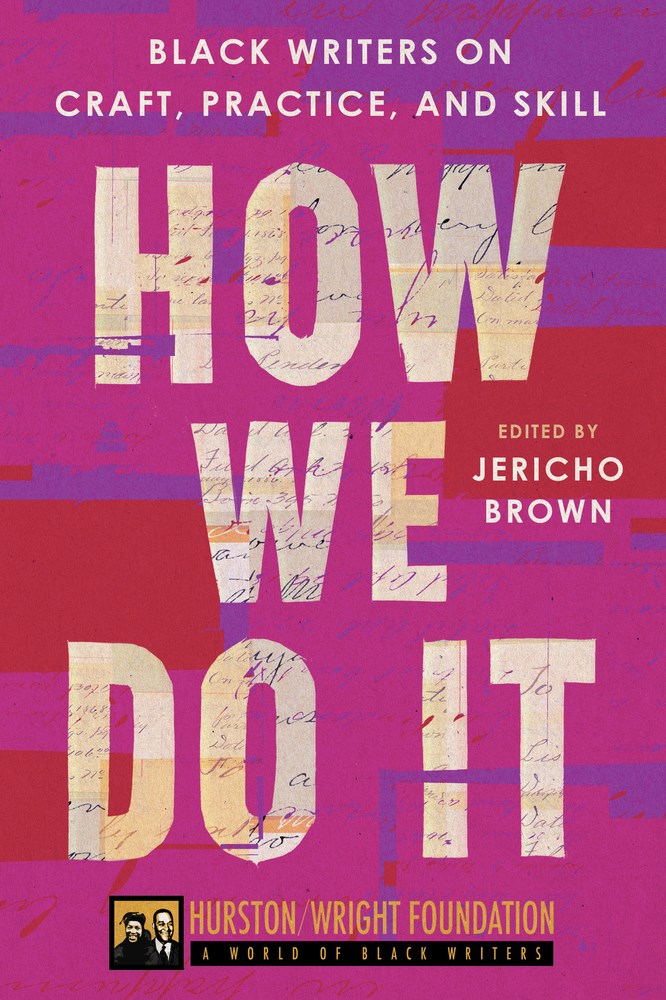
How We Do It: Black Writers on Craft, Practice, and Skill
by Jericho Brown
Sold out*Ships in 7-10 business days*
More than 30 acclaimed writers—including diverse voices such as Nikki Giovanni, David Omotosho Black, Natasha Trethewey, Barry Jenkins, Jacqueline Woodson, Tayari Jones, and Angela Flournoy—reflect on their experience and expertise in this unique book on the craft of writing that focuses on the Black creative spirit.
How We Do It is an anthology curated by Black writers for the creation and proliferation of Black thought. While a creator’s ethnicity does not solely define them, it is inherently part of who they are and how they interpret the world.
For centuries, Black creators have utilized oral and written storytelling traditions in crafting their art. But how does one begin the process of constructing a poem or story or character? How do Black writers, when faced with questions of “authenticity,” dive deep into the essence of their lives and work to find the inherent truth? How We Do It addresses these profound questions. Not a traditional “how to” writing handbook, it seeks to guide rather than dictate and to validate the complexity and range of styles—and even how one thinks about craft itself.
An outstanding list of contributors offer their insights on a range of important topics. Pulitzer Prize winner Jericho Brown explores the lives personified in poetry, while Pulitzer Prize winner Natasha Trethewey explores decolonizing enduring metaphors. National Book Award finalist Angela Flournoy illuminates the pain of grief in all forms and how it can be revealed in the act of creation, and iconoclast Nikki Giovanni offers an elegiac declaration on language.
New and previously published essays and interviews provide encouragement, examples, and templates, and offer lessons on everything from poetic form and plotting a story to the lessons inherent in the act of writing, trial & error, and finding inspiration in the works of others, including those of Toni Morrison, Shakespeare, and Edward P. Jones. A handbook and a reference tool, How We Do It is a thoughtful and welcome tool that offers direction to help Black artists establish their own creative practice while celebrating and widening the scope of the Black writer’s role in art, history, and culture.
Contributors include David Omotosho Black, Jericho Brown, Breena Clark, Rita Dove, Camille T. Dungy, W. Ralph Eubanks, Curdella Forbes, Angela Flournoy, Ernest Gaines, Nikki Giovanni, Marita Golden, Ravi Howard, Terrance Hayes, Mitchell S. Jackson, Barry Jenkins, Charles S. Johnson, Tayari Jones, Jamaica Kincaid, Tony Medina, E. Ethelbert Miller, Elizabeth Nunez, Carl Phillips, Jewell Parker Rhodes, Rion Amilcar Scott, Evie Shockley, Natasha Trethewey, Frank X Walker, Afaa M. Weaver, Crystal Wilkinson, Jacqueline Woodson, Tiphanie Yanique.
-
A Raisin In The Sun
![A Raisin In The Sun]()
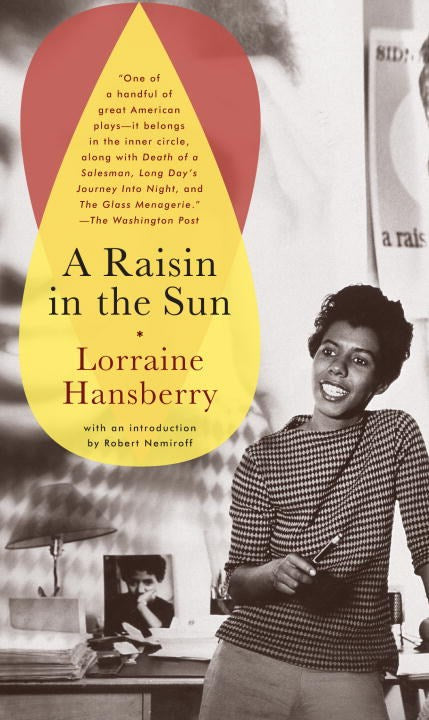
A Raisin In The Sun
by Lorraine Hansberry
Sold out“Never before, the entire history of the American theater, has so much of the truth of black people’s lives been seen on the stage,” observed James Baldwin shortly before A Raisin in the Sun opened on Broadway in 1959.
Indeed Lorraine Hansberry’s award-winning drama about the hopes and aspirations of a struggling, working-class family living on the South Side of Chicago connected profoundly with the psyche of black America—and changed American theater forever. The play’s title comes from a line in Langston Hughes’s poem “Harlem,” which warns that a dream deferred might “dry up/like a raisin in the sun.”
“The events of every passing year add resonance to A Raisin in the Sun,” said The New York Times. “It is as if history is conspiring to make the play a classic.” This Modern Library edition presents the fully restored, uncut version of Hansberry’s landmark work with an introduction by Robert Nemiroff.


Stay Informed. We're building a community committed to celebrating Black authors + artisans. Subscribe to keep up with all things Kindred Stories.