
Search results: 18 results for “Amiri Baraka”
Not finding what you're looking for? Check out our shop on bookshop.org to order and still support us ♥
18 results
-
S O S: Poems 1961-2013
![S O S: Poems 1961-2013 cover image]()

S O S: Poems 1961-2013
$22.00One of the New York Times Book Review's 100 Notable Books
WITH AN APPENDIX OF NEVER-BEFORE-PUBLISHED WORK
Fusing the personal and the political in high-voltage verse, Amiri Baraka was one of the preeminent literary innovators of the past century. This volume comprises the fullest spectrum of his rousing, revolutionary poems, from his first collection to unpublished pieces composed during his final years.
Throughout Baraka’s career as a prolific writer in several genres (also published under the name LeRoi Jones), he was vehemently outspoken against oppression of African American citizens, and he radically altered the discourse surrounding racial inequality. His legacy in world literature is matched by his widespread influence as an activist and cultural leader. Praised for its lyricism and introspection, his early poetry emerged from the Beat generation, while his later writing is marked by the Black Arts Movement's intensely rebellious fervor and subversive ideology. All along, his primary focus was on how to live and love in the present moment despite the enduring difficulties of human history.
-
Blues People: Negro Music in White America
![Blues People: Negro Music in White America cover image]()

Blues People: Negro Music in White America
Leroi Jones
$16.99"A must for all who would more knowledgeably appreciate and better comprehend America's most popular music." — Langston Hughes
"The path the slave took to 'citizenship' is what I want to look at. And I make my analogy through the slave citizen's music—through the music that is most closely associated with him: blues and a later, but parallel development, jazz... [If] the Negro represents, or is symbolic of, something in and about the nature of American culture, this certainly should be revealed by his characteristic music."
So says Amiri Baraka (previously known as LeRoi Jones) in the Introduction to Blues People, his classic work on the place of jazz and blues in American social, musical, economic, and cultural history. From the music of African slaves in the United States through the music scene of the 1960's, Baraka traces the influence of what he calls "negro music" on white America—not only in the context of music and pop culture but also in terms of the values and perspectives passed on through the music. In tracing the music, he brilliantly illuminates the influence of African Americans on American culture and history.
-
How to Go Mad without Losing Your Mind: Madness and Black Radical Creativity (Black Outdoors: Innovations in the Poetics of Study)
![How to Go Mad without Losing Your Mind: Madness and Black Radical Creativity (Black Outdoors: Innovations in the Poetics of Study) cover image]()

How to Go Mad without Losing Your Mind: Madness and Black Radical Creativity (Black Outdoors: Innovations in the Poetics of Study)
La Marr Jurelle Bruce
$29.95Winner of the 2022 Modern Language Association First Book Prize
Winner of the 2022 Nicolás Cristóbal Guillén Batista Outstanding Book Award, presented by the Caribbean Philosophical Association
"Hold tight. The way to go mad without losing your mind is sometimes unruly." So begins La Marr Jurelle Bruce's urgent provocation and poignant meditation on madness in black radical art. Bruce theorizes four overlapping meanings of madness: the lived experience of an unruly mind, the psychiatric category of serious mental illness, the emotional state also known as "rage," and any drastic deviation from psychosocial norms. With care and verve, he explores the mad in the literature of Amiri Baraka, Gayl Jones, and Ntozake Shange; in the jazz repertoires of Buddy Bolden, Sun Ra, and Charles Mingus; in the comedic performances of Richard Pryor and Dave Chappelle; and in the protest music of Nina Simone, Lauryn Hill, and Kendrick Lamar, among many others. These artists activate madness as content, form, aesthetic, strategy, philosophy, and energy in an enduring black radical tradition. Joining this tradition, Bruce mobilizes what he calls "mad methodology"—where madness informs and animates ways of reading, ways of thinking, ways of feeling, ways of telling, ways of being, and ways of life. Ultimately, How to Go Mad without Losing Your Mind is both a study and an act of critical, ethical, radical madness.
-
Songs My Mother Taught Me: Why the Artist Must Take Sides (Vanguard)
![Songs My Mother Taught Me: Why the Artist Must Take Sides (Vanguard) cover image]()

Songs My Mother Taught Me: Why the Artist Must Take Sides (Vanguard)
$17.95Award-winning poet and performer Saul Williams explores how artists today must respond to systemic violence and injustice―in the words of Paul Robeson, by choosing sides.
Songs My Mother Taught Me is Williams’ clear-eyed exploration of the role of the artist in these times by answering the question: what radicalized you? He answers by examining how his role models―writers and artists, from Amiri Baraka to local musicians in Brazilian bars to Palestinian hip-hop heads―have responded to imperialist violence, oppression, and genocide. Riffing on Paul Robeson’s famous declaration, Williams builds a provocative case for why today’s artists cannot remain neutral in the face of injustice. “We need songs that crumble empires,” he writes, “films that teach, remind, and inspire, poems that would make a despot revoke your citizenship.”
The radical artists of the Vanguard Series offer new poetry and prose to answer the question, What does poetry have to do with politics?
-
The Afterlife of Malcolm X: An Outcast Turned Icon's Enduring Impact on America
![The Afterlife of Malcolm X: An Outcast Turned Icon's Enduring Impact on America cover image]()

The Afterlife of Malcolm X: An Outcast Turned Icon's Enduring Impact on America
Mark Whitaker
from $21.00Published to coincide with the hundredth anniversary of his birth, the first major study of Malcolm X’s influence in the sixty years since his assassination, exploring his enduring impact on culture, politics, and civil rights.
Malcolm X has become as much of an American icon as Abraham Lincoln, John F. Kennedy, or Martin Luther King. But when he was murdered in 1965, he was still seen as a dangerous outsider. White America found him alienating, mainstream African Americans found him divisive, and even his admirers found him bravely radical. Although Ossie Davis famously eulogized Malcolm X as “our own Black shining prince,” he never received the mainstream acceptance toward which he seemed to be striving in his final year. It is more in death than his life that Malcolm’s influence has blossomed and come to leave a deep imprint on the cultural landscape of America.
With impeccable research and original reporting, Mark Whitaker tells the story of Malcolm X’s far-reaching posthumous legacy. It stretches from founders of the Black Power Movement such as Stokely Carmichael and Huey Newton to hip-hop pioneers such as Public Enemy and Tupac Shakur. Leaders of the Black Arts and Free Jazz movements from Amiri Baraka to Maya Angelou, August Wilson, and John Coltrane credited their political awakening to Malcolm, as did some of the most influential athletes of our time, from Muhammad Ali to Kareem Abdul-Jabbar and beyond. Spike’s movie biopic and the Black Lives Matter movement reintroduced Malcolm to subsequent generations. Across the political spectrum, he has been cited as a formative influence by both Barack Obama—who venerated Malcolm’s “unadorned insistence on respect”—and Clarence Thomas, who was drawn to Malcolm’s messages of self-improvement and economic self-help.
In compelling new detail, Whitaker also retraces the long road to exoneration for two men wrongfully convicted of Malcolm’s murder, making The Afterlife of Malcolm X essential reading for anyone interested in true crime, American politics, culture, and history.
-
African American Poetry: 250 Years of Struggle and Song Edited
![African American Poetry: 250 Years of Struggle and Song Edited]()
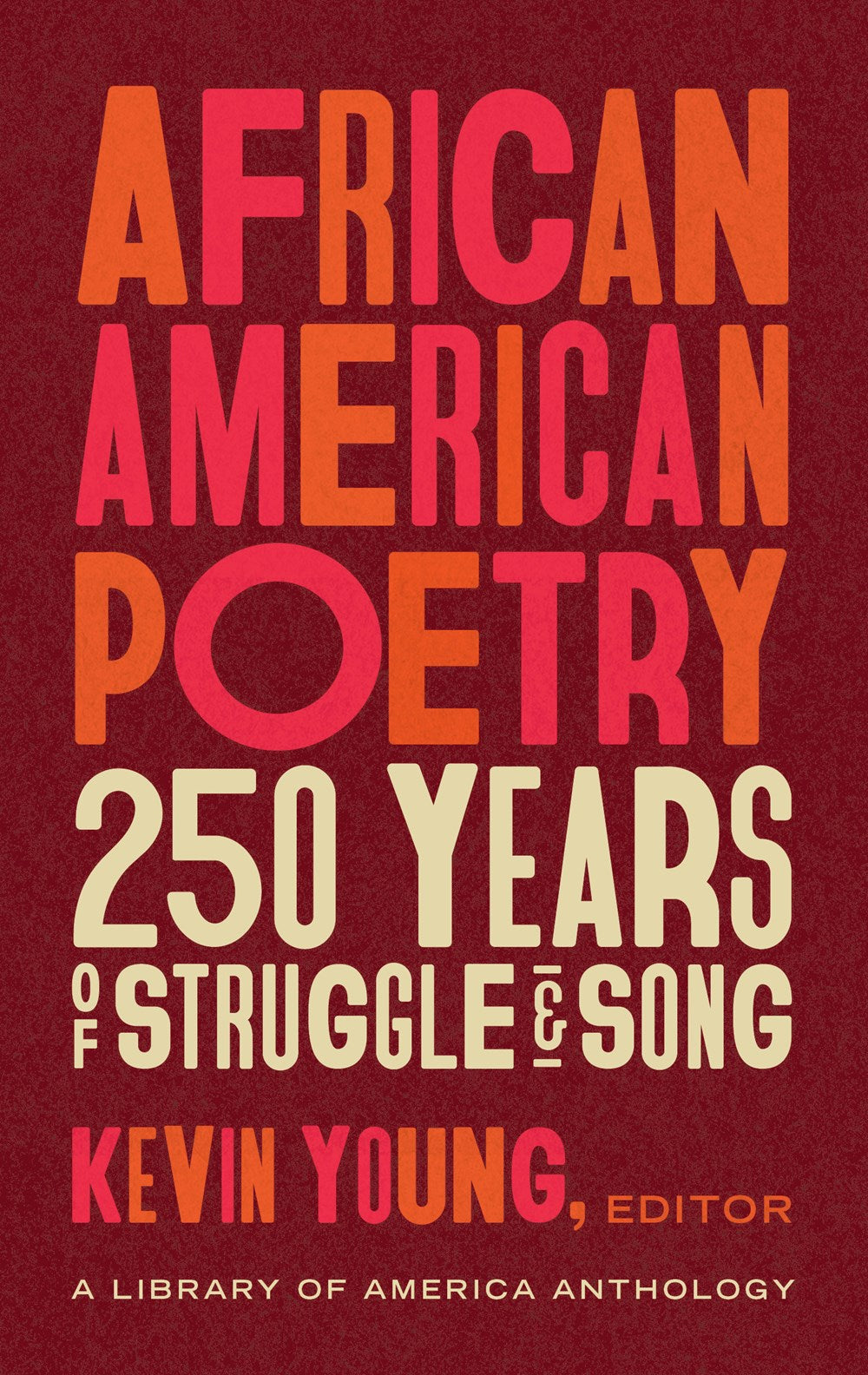
African American Poetry: 250 Years of Struggle and Song Edited
by Kevin Young
$45.00A literary landmark: the biggest, most ambitious anthology of black poetry ever published, gathering 250 poets from the colonial period to the present.
Only now, in the 21st century, can we fully grasp the breadth and range of African American poetry: a magnificent chorus of voices, some familiar, others recently rescued from neglect. Here, in this unprecedented anthology expertly selected by poet and scholar Kevin Young, this precious living heritage is revealed in all its power, beauty, and multiplicity.
Discover, in these pages, how an enslaved person like Phillis Wheatley confronted her legal status in verse and how an antebellum activist like Frances Ellen Watkins Harper voiced her own passionate resistance to slavery. Read nuanced, provocative poetic meditations on identity and self-assertion stretching from Paul Laurence Dunbar to Amiri Baraka to Lucille Clifton and beyond. Experience the transformation of poetic modernism in the works of figures such as Langston Hughes, Fenton Johnson, and Jean Toomer. Understand the threads of poetic history—in movements such as the Harlem and Chicago Renaissances, Black Arts, Cave Canem, Dark Noise Collective—and the complex bonds of solidarity and dialogue among poets across time and place.
See how these poets have celebrated their African heritage and have connected with other communities in the African Diaspora. Enjoy the varied but distinctly Black music of a tradition that draws deeply from jazz, hip hop, and the rhythms and cadences of the pulpit, the barbershop, and the street. And appreciate, in the anthology’s concluding sections, why contemporary African American poetry, amply recognized in recent National Book Awards and Poet Laureates, is flourishing as never before.Taking the measure of the tradition in a single indispensable volume, African American Poetry: 250 Years of Struggle and Song sets a new standard for a genuinely deep engagement with Black poetry and its essential expression of American genius. -
Black American Short Stories (American Century Series)
![Black American Short Stories (American Century Series) cover image]()

Black American Short Stories (American Century Series)
$22.00The success of John Henrik Clarke's American Negro Short Stories, first published in 1966, affirmed the vitality and importance of black fiction. Now this expanded edition of that best-selling book, with a new title, offers the reader thirty-one stories included in the original―from Charles W. Chesnutt and Paul Laurence Dunbar in the late nineteenth century to the rich and productive work of the Harlem Renaissance: writers like Zora Neale Hurston, Langston Hughes, and Richard Wright; the World War II accomplishments of Chester Himes, Frank Yerby, and many others; and the later fiction of James Baldwin, Paule Marshall, and LeRoi Jones (Imamu Amiri Baraka). Seven additional contributions round out a century of great stories with the work of Maya Angelou, Toni Cade Bambara, Eugenia Collier, Jennifer Jordan, James Allan McPherson, Rosemarie Robotham, and Alice Walker. Dr. Clarke has included a new introduction to this 1993 edition, and a short biography of each contributor.
-
Flyboy 2: The Greg Tate Reader
![Flyboy 2: The Greg Tate Reader]()
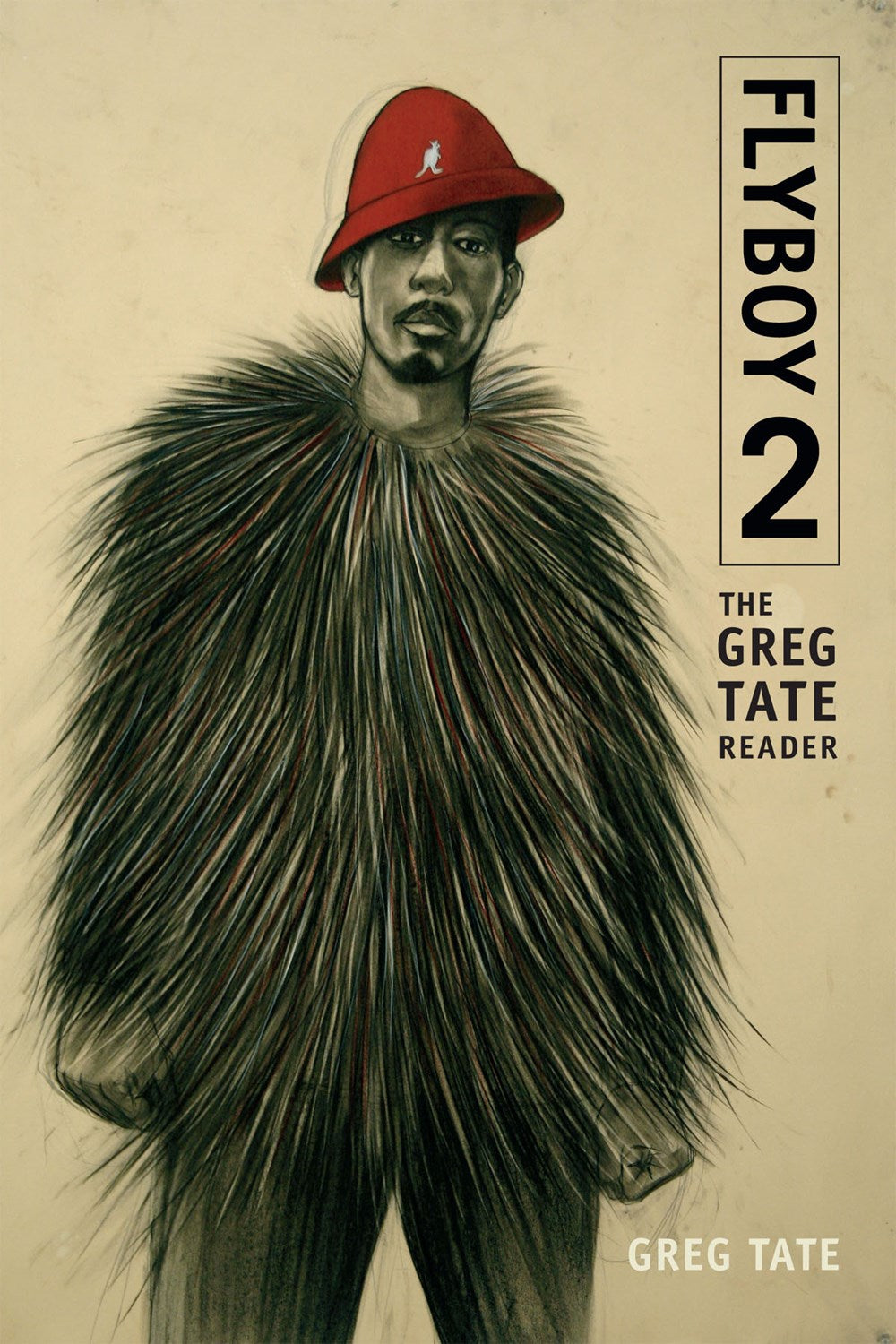
Flyboy 2: The Greg Tate Reader
by Greg Tate
$28.95Flyboy 2 provides a panoramic view of the last thirty years of Greg Tate's influential cultural criticism of contemporary Black music, art, literature, film, and politics. These essays, interviews, and reviews cover everything from Miles Davis, Ice Cube, and Suzan Lori Parks to Afro-futurism, Kara Walker, and Amiri Baraka.
Since launching his career at the Village Voice in the early 1980s Greg Tate has been one of the premiere critical voices on contemporary Black music, art, literature, film, and politics. Flyboy 2 provides a panoramic view of the past thirty years of Tate's influential work. Whether interviewing Miles Davis or Ice Cube, reviewing an Azealia Banks mixtape or Suzan-Lori Parks's Topdog/Underdog, discussing visual artist Kara Walker or writer Clarence Major, or analyzing the ties between Afro-futurism, Black feminism, and social movements, Tate's resounding critical insights illustrate how race, gender, and class become manifest in American popular culture. Above all, Tate demonstrates through his signature mix of vernacular poetics and cultural theory and criticism why visionary Black artists, intellectuals, aesthetics, philosophies, and politics matter to twenty-first-century America. -
The Big Sea (American Century Series)
![The Big Sea (American Century Series) cover image]()

The Big Sea (American Century Series)
Langston Hughes
$20.00"This book is the chronicle of a bright and lively artistic ear that brought the African-American people full into the twentieth century. It is a wonderful book!” ―Amiri Baraka
In his incisive introduction to The Big Sea, an American classic, Arnold Rampersad writes: "This is American writing at its best--simpler than Hemingway; as simple and direct as that of another Missouri-born writer...Mark Twain."
Langston Hughes, born in 1902, came of age early in the 1920s. In The Big Sea he recounts those memorable years in the two great playgrounds of the decade--Harlem and Paris. In Paris he was a cook and waiter in nightclubs. He knew the musicians and dancers, the drunks and dope fiends. In Harlem he was a rising young poet--at the center of the "Harlem Renaissance."
-
Jazz Poems (Everyman's Library Pocket Poets Series)
![Jazz Poems (Everyman's Library Pocket Poets Series) cover image]()

Jazz Poems (Everyman's Library Pocket Poets Series)
$20.00A vital and surprising hardcover collection of poems about, and inspired by, jazz music. AN EVERYMAN'S LIBRARY POCKET POET. Selected and Edited by Kevin Young.
Ever since its first flowering, jazz has had a powerful influence on American poetry; this scintillating anthology offers a treasury of poems that are as varied and as vital as the music that inspired them.
From the Harlem Renaissance to the beat movement, from the poets of the New York school to the contemporary poetry scene, the jazz aesthetic has been a compelling literary force—one that Jazz Poems makes palpable. We hear it in the poems of Langston Hughes, E. E. Cummings, William Carlos Williams, Frank O’Hara, and Gwendolyn Brooks, and in those of Yusef Komunyakaa, Charles Simic, Rita Dove, Ntozake Shange, Mark Doty, William Matthews, and C. D. Wright. Here are poems that pay tribute to jazz’s great voices, and poems that throb with the vivid rhythm and energy of the jazz tradition, ranging in tone from mournful elegy to sheer celebration.
Includes:
• “Jazz Band in a Parisian Cabaret” by Langston Hughes
• “God Bless the Child” by Billie Holiday and Arthur Herzog, Jr.
• “Jazz Fantasia” by Carl Sandburg
• “Ol’ Bunk’s Band” by William Carlos Williams
• “We Real Cool” by Gwendolyn Brooks
• “Chasing the Bird” by Robert Creeley
• “Victrola” by Robert Pinsky
• “Pres Spoke in a Language” by Amiri Baraka
• “The Day Lady Died” by Frank O’Hara
• “Art Pepper” by Edward Hirsch
• “Snow” by Billy Collins
Everyman's Library pursues the highest production standards, printing on acid-free cream-colored paper, with full-cloth cases with two-color foil stamping, decorative endpapers, silk ribbon markers, European-style half-round spines, and a full-color illustrated jacket. -
All Your Racial Problems Will Soon End: The Cartoons of Charles Johnson
![All Your Racial Problems Will Soon End: The Cartoons of Charles Johnson]()

All Your Racial Problems Will Soon End: The Cartoons of Charles Johnson
by Charles Johnson
$34.95*ships/available for pickup in 7-10 business days
Years before he wrote his National Book Award–winning novel Middle Passage, Charles Johnson created these sidesplitting and subversive gag comics about Black life in America, now collected for the first time in nearly half a century.
Before Charles Johnson found fame as a novelist and won the National Book Award for Middle Passage in 1991, he was a cartoonist, and a very good one.
Taught via mail correspondence course by the comics editor Lawrence Lariar, mentored by the New Yorker cartoonist Charles Barsotti, and inspired by the call of poet Amiri Baraka to celebrate and depict Black life in America, Johnson crafted some of the fiercest and funniest cartoons of the twentieth century.
Reimagining the gag comic as a powerful and incendiary tool, Johnson tackled America’s mid-century afflictions—segregation, inner-city poverty, police brutality, and white supremacy—by craftily subverting stale gag tropes. He populated them with bullet-dodging Black Panthers, doubt-filled Klansmen, militant babies, self-serving politicians, and complacent suburban liberals.
This collection, Johnson’s first in nearly fifty years, brings together work from across his career: college newspaper gags, selections from his books Black Humor and Half-Past Nation Time, his unpublished manuscript Lumps in the Melting Pot, and uncollected pieces. Taken together, this volume reveals Johnson as long overdue for appreciation as a cartoonist of the first order. -
Praisesong for the Widow: (Of the Diaspora - North America) (Of the Diaspora, 2)
![Praisesong for the Widow: (Of the Diaspora - North America) (Of the Diaspora, 2) cover image]()

Praisesong for the Widow: (Of the Diaspora - North America) (Of the Diaspora, 2)
Paule Marshall
$24.00Featuring a new original introduction by Opal Palmer Adisa
Avey Johnson--a Black, middle-aged, middle-class widow given to hats, gloves, and pearls--has long since put behind her the Harlem of her childhood. Then on a cruise to the Caribbean with two friends, inspired by a troubling dream, she senses her life beginning to unravel--and in a panic packs her bag in the middle of the night and abandons her friends at the next port of call. The unexpected and beautiful adventure that follows provides Avey with the links to the culture and history she has so long disavowed. Originally published in 1983, Praisesong for the Widow was a recipient of the Before Columbus Foundation American Book Award, and is presented here in a beautiful new hardcover edition as the second title in McSweeney's Of the Diaspora series.
"Astonishingly moving."
-Anne Tyler, The New York Times Book ReviewAbout Of the Diaspora
McSweeney's Of the Diaspora is a series of previously published works in Black literature whose themes, settings, characterizations, and conflicts evoke an experience, language, imagery and power born of the Middle Passage and the particular aesthetic which connects African-derived peoples to a shared artistic and ancestral past. Wesley Brown's Tragic Magic, the first novel in the series, was originally published in 1978 and championed by Toni Morrison during her tenure as an editor at Random House. This Of the Diaspora edition features a new introduction written by Brown for the series. Tragic Magic will be followed by Paule Marshall's novel of a Harlem widow claiming new life. Praisesong for the Widow was originally published in 1983 and was a recipient of the Before Columbus Foundation American Book Award. The series is edited by writer Erica Vital-Lazare, a professor of creative writing and Marginalized Voices in literature at the College of Southern Nevada. Published in collectible hardcover editions with original cover art by Sunra Thompson, the first three works hail from Black American voices defined by what Amiri Baraka described as strong feeling "getting into new blues, from the old ones." Of the Diaspora-North America will be followed by series from the diasporic communities of Europe, the Caribbean and Brazil.


Stay Informed. We're building a community committed to celebrating Black authors + artisans. Subscribe to keep up with all things Kindred Stories.