
Social Justice
- PRE-ORDER: The Antinomies of Black Marxism: Critique of the Racial Capitalism Paradigm
![The Antinomies of Black Marxism: Critique of the Racial Capitalism Paradigm cover image]()

PRE-ORDER: The Antinomies of Black Marxism: Critique of the Racial Capitalism Paradigm
$56.99Cedric Robinson’s widely acclaimed study on Marxism and race has enjoyed a celebratory renaissance in recent years, becoming commonplace across the disciplines and beyond to activist and left circles. The Antinomies of Black Marxism contests its now‑enormous influence, bringing together leading scholars of Marxism to reassess the decisive question of race and Marxist thought and practice.
While varied in their approaches, the contributors all affirm that racism is a modern production of capitalist class exploitation. They put forth a trenchant and uncompressing critique of Black Marxism. They see Robinson’s transhistoric racialism and hostility to Marxism as politically dangerous to the extent that it propagates a race over a class consciousness that undermines working‑class unity. They place a premium on multiethnic, transnational proletarian struggle against capitalism at a time of epochal crisis in the global capitalist system.
This indispensable compendium makes a timely contribution to contemporary debates on race, class, capitalism, and social inequality and is essential to classes on Black Studies and black social thought, as it provides a thorough analysis and critique of one of the landmark contemporary critical theorists in US political and social theory.
- Liberation Stories: Building Narrative Power for 21st-Century Social Movements
![Liberation Stories: Building Narrative Power for 21st-Century Social Movements cover image]()

Liberation Stories: Building Narrative Power for 21st-Century Social Movements
$34.99From an international cast of leading activist communicators, a timely and instructive handbook for telling stories that change the world
The twenty-first century has seen a profound shift in the global sociopolitical and economic landscape, shaped by seismic interventions ranging from the War on Terror to the COVID-19 pandemic. Between 2000 and 2024, social movements like Black Lives Matter, #MeToo, climate justice, the Fight for $15, Palestine liberation, health care for all, and queer and trans resistance have illuminated a new narrative—one rooted in an inclusive vision of society, driven by a newly politicized and radicalized generation. This shift did not happen by chance. Movement workers have meticulously crafted communications and narrative strategies, honing their political messaging and storytelling to seize narrative power in today’s struggles.
In Liberation Stories, today’s foremost progressive and leftist communicators, organizers, artists, journalists, and academics share their collective wisdom in one powerful volume. Featuring in-depth case studies of both contemporary and historical movements, Liberation Stories distills successful theories, strategies, and tactics for anyone wanting to understand—and participate in—the diverse initiatives currently shaping our society.
As far-right and conservative movements gain traction worldwide—attacking our books, our bodies, and our democracies—Liberation Stories emerges as a vital resource for constructing the world we envision, one story at a time.
- Why Are All the Black Kids Sitting Together in the Cafeteria?: And Other Conversations about Race
![Why Are All the Black Kids Sitting Together in the Cafeteria?: And Other Conversations about Race cover image]()

Why Are All the Black Kids Sitting Together in the Cafeteria?: And Other Conversations about Race
$21.99The classic, New York Times-bestselling book on the psychology of racism that shows us how to talk about race in America.
Walk into any racially mixed high school and you will see Black, White, and Latino youth clustered in their own groups. Is this self-segregation a problem to address or a coping strategy? How can we get past our reluctance to discuss racial issues?
Beverly Daniel Tatum, a renowned authority on the psychology of racism, argues that straight talk about our racial identities is essential if we are serious about communicating across racial and ethnic divides and pursuing antiracism. These topics have only become more urgent as the national conversation about race is increasingly acrimonious. This fully revised edition is essential reading for anyone seeking to understand dynamics of race and racial inequality in America.
- Iranians in Texas: Migration, Politics, and Ethnic Identity (Bridwell Texas History)
![Iranians in Texas: Migration, Politics, and Ethnic Identity (Bridwell Texas History) cover image]()

Iranians in Texas: Migration, Politics, and Ethnic Identity (Bridwell Texas History)
Sold outAn exploration of the link between politics of migration, prospects of integration, and ethnic identity among Iranian immigrants and their descendants in the United States, spanning from the 1970s to the present day.
Thousands of Iranians fled their homeland when the 1978–1979 revolution ended the fifty-year reign of the Pahlavi dynasty. Some fled to Europe and Canada, while others settled in the United States, where anti-Iranian sentiment flared as the hostage crisis unfolded. For those who chose America, Texas became the fourth-largest settlement area. Iranians in Texas culls data, interviews, and participant observations in Iranian communities in Houston, Dallas, and Austin to reveal the difficult, private world of cultural pride, religious experience, marginality, culture clashes, and other aspects of the lives of these immigrants.
Examining the political nature of immigration between Iran and the United States and social, cultural, and economic life for Iranian immigrants and their American-born children, Mohsen Mostafavi Mobasher incorporates his own experience as a Texas scholar born in Iran. In this revised edition, two new chapters and a new introduction and conclusion provide updates on what has happened in the Obama, Trump, and Biden administrations, including the Iran nuclear deal and resulting controversy, the Muslim ban, and the global protests over the death of twenty-two-year-old Mahsa Amini for not wearing a hijab. Bringing to life a unique immigrant population in the context of global politics, Iranians in Texas overturns stereotypes and echoes diverse voices.
- Dos X: Disability and Racial Dysphoria in Latinx and Filipinx Culture (Latinx: The Future Is Now)
![Dos X: Disability and Racial Dysphoria in Latinx and Filipinx Culture (Latinx: The Future Is Now) cover image]()

Dos X: Disability and Racial Dysphoria in Latinx and Filipinx Culture (Latinx: The Future Is Now)
Sold outAn examination of the interconnectedness of brown-racialized people across multiple identities, told through case studies of television, literature, and writing.
As a Filipinx immigrant to the United States, Sony Coráñez Bolton has frequently been mistaken as Mexican. Dos X theorizes such misrecognition. What does it mean to exist in this liminal state, which Coráñez Bolton dubs the “racial uncanny”? What generative possibilities emerge from the presumed interchangeability of Latinx and Filipinx bodies—and from the in-betweenness of brownness as such?
Dos X tracks misrecognition through cultural products like the TV series Undone, Brian Ascalon Roley’s American Son, and the nonfiction work of Jose Antonio Vargas. Misrecognition, Coráñez Bolton argues, produces moments of uncanniness in which subjects experience dysphoric attachments to identities that aren’t supposed to be theirs. In the context of racial capitalism, racial dysphoria is a disability because it undermines certainty about what one’s body is and therefore what role one is meant to play as a laborer. But racial dysphoria can also be revealing. Coráñez Bolton identifies vast potential in this supposed disability, which compels its “sufferers” to confront their shared position within the social, political, and economic organization of capital’s empire, opening new avenues for liberatory solidarity.
- They All Want Magic: Curanderas and Folk Healing (Volume 16) (Rio Grande/Río Bravo: Borderlands Culture and Traditions)
![They All Want Magic: Curanderas and Folk Healing (Volume 16) (Rio Grande/Río Bravo: Borderlands Culture and Traditions) cover image]()

They All Want Magic: Curanderas and Folk Healing (Volume 16) (Rio Grande/Río Bravo: Borderlands Culture and Traditions)
$19.95Curanderas—traditional healers in Mexican culture—bridge the gaps between multiple planes of existence—spiritual and material, modern and pre-modern—dispensing medicinal herbs, prayers, and instruction. Elizabeth de la Portilla writes of the world and practices of San Antonio curanderas. As a scholar, an ethnographer, and a curandera in training, her parallel perspectives uniquely aid readers in understanding this subordinated culture. Retelling the stories various healers have shared, interpreting their answers to her probing questions, and describing the herbs and recipes they use in their arts, the author vividly illuminates the borderland context of San Antonio. Scholars and readers of anthropology, sociology, Chicana and Chicano studies, and women's studies will savor the many layers of meaning and application in They All Want Magic.
- PRE-ORDER: Deep in the Soul of Texas: An Anthology of Black Literature from the Lone Star State (Wittliff Collections Literary Series)
![PRE-ORDER: Deep in the Soul of Texas: An Anthology of Black Literature from the Lone Star State (Wittliff Collections Literary Series)]()

PRE-ORDER: Deep in the Soul of Texas: An Anthology of Black Literature from the Lone Star State (Wittliff Collections Literary Series)
$35.00Deep in the Soul of Texas: An Anthology of Black Literature from the Lone Star State presents vivid firsthand accounts of resistance, perseverance, and triumph of the Black experience as the first-ever anthology of African American Texan writers. From Giddings poet Gwendolyn B. Bennett (1902–1981) to Beaumont native and intellectual Amilcar Shabazz, this anthology highlights the most prominent literary figures of each decade and features Texas’ leading African American writers of today.
Edited by Cary Clack, the first Black metro columnist at the San Antonio Express-News, this anthology represents an important attempt at uncovering and celebrating the roots of Black writing and writers from and about Texas. This collection of poetry, fiction, essays, drama, speeches, and memoir join to celebrate story, imagination, and language of the last 150 years of Texas history. Within each chapter, the anthology grows one step closer in addressing a longstanding question that looms over the Lone Star State: what does it mean to be Black in Texas?
Each of the five parts in this anthology features a different facet of Black history from escape and heritage to folklore and injustice. Illuminating the varied Black experience in Texas, this anthology fills a major gap in Texas literature. Deep in the Soul of Texas brings light to all Texans as it helps change conversations―not just about what it means to be Black in Texas but expanding conceptions of what being “a Texan” truly means.
- PRE-ORDER: Spectral Aesthetics: Visualizing the Crisis of Migrant Disappearance
![Spectral Aesthetics: Visualizing the Crisis of Migrant Disappearance cover image]()

PRE-ORDER: Spectral Aesthetics: Visualizing the Crisis of Migrant Disappearance
$34.95Analyzing how artists reimagine migrant disappearance and visibility at the US–Mexico border.
In the mid-1990s, the US government implemented Prevention through Deterrence, a major buildup of troops, walls, and surveillance around El Paso and San Diego. Cut off from these crucial urban crossings, migrants flowed into the dangerous surrounding deserts, where some ten thousand have since died. This is all according to plan: Pentagon documents describe the strategy of funneling migrants toward “mortal danger.”
In this bracing critique, China Medel explores the aesthetics enabling and resisting the crisis of migrant death. The nation-state’s performance of sovereignty along the border, predicated on mass casualties, is tolerated and even celebrated, thanks to the images in our heads of racialized and therefore criminal bodies, made invisible as they disintegrate in the baking sand. Spectral Aesthetics shows how state officials and mainstream media, relying on postracial ideologies and white-supremacist agendas, collectively foster this picture of a brown body so abject that it is disposable. In close readings of artworks contesting this murderous visual regime, Medel discovers an alternative kind of sight, one emphasizing the ghostly traces of the dead. These are images not of the individual “alien” but of life itself, indisposable.
- Everyday Sh!t: Notes on Abolition and Reconstruction (Abolition Collective)
![Everyday Sh!t: Notes on Abolition and Reconstruction (Abolition Collective) cover image]()

Everyday Sh!t: Notes on Abolition and Reconstruction (Abolition Collective)
$20.00The inaugural issue of the movement-focused and future-forward Abolition Journal quarterly after it was relaunched by the Philadelphia-based Abolition School.
This pilot issue of the revived Abolition Journal is produced by the Philadelphia-based W.E.B. Du Bois Movement School for Abolition & Reconstruction. It brings together two dozen urgent and timely interventions in political debates around abolition and aims to show how this abstract idea manifests itself in our daily lives.
These interventions, authored by a diverse cast of contributors, including academics and attorneys, so-called felons and physicians, artists and educators, and parents, playwrights and poets, explore the everyday experiences that come with trying to live out an abolitionist politics. In the words of the editors, these experiences include “the daily victories and errands, reflections and runarounds, gestures and drama, habits and heartbreaks, setbacks and surrenders, excuses and evasions, breakdowns and breakthroughs.”
The issue curates a variety of content, including political essays, short stories, poetry, interviews, and speeches, each resonating and reflecting in their own unique way on the central theme “Everyday Sh!t.” They offer thoughts and reflections on structure, practice, care, and direction to deepen existing movement knowledge and invite new audiences to see themselves mirrored within this work.
Without exception, these are stories of sincere experience mixed with radical poetic visions culled from the issue contributors’ plurality of pasts, presents, and prefigurative futures. Grounded in Philadelphia, yet looking out onto the whole wide world, Abolition Journal aims to reflect the lived complexity that can be messy and self-defeating, but equally authentic and inspiring. - Freedom: Essays
![Freedom: Essays cover image]()

Freedom: Essays
$29.00A radically vulnerable and virtuosic inquiry into the pursuit of freedom and the interminable nature of struggle, from the award-winning author of What We Lose
Weaving personal reflections with piercing insight and expansive vision across nine brilliant essays, Zinzi Clemmons explores the complexities of the elusive concept of freedom. As the daughter of a South African mother and a Trinidadian America father, she recounts growing up in the largely white, affluent town of Swarthmore, Pennsylvania—and her frequent travels to Johannesburg, where the lofty promise of freedom was all around her. Coming of age amidst the euphoria of South Africa's first all-race elections, she grapples with the legacy of Nelson Mandela and the shattered hope in the wake of the Obama era. Clemmons critiques the entrenched inequalities that haunt both countries, from the tragic loss of a childhood friend to the violence that often befalls women who have the audacity to be free.
In a deft mix of memoir, family history, criticism, and reportage, drawing on a vast range of material from Joan Didion to James Baldwin, political analysis and history to Clemmons’s own experiences across the globe, Freedom is an incendiary exploration of race, sex, class, and inheritance. In elegiac prose, Clemmons trains her discerning eye on American institutions and mythologies, probing the bounds of liberation and autonomy to interrogate our most enduring quest—the relentless pursuit of freedom for all.
- Economy Hall: The Hidden History of a Free Black Brotherhood
![Economy Hall: The Hidden History of a Free Black Brotherhood cover image]()

Economy Hall: The Hidden History of a Free Black Brotherhood
$34.95Selected by Kirkus for "Best of 2021: Our Favorite Nonfiction"
It is impossible to imagine New Orleans, and by extension American history, without the vibrant and singular Creole culture. In the face of an oppressive white society, members of the Société d’Economie et d’Assistance Mutuelle built a community and held it together through the era of slavery, the Civil War, Reconstruction, and Jim Crow terrorism. Economy Hall: The Hidden History of a Free Black Brotherhood follows Ludger Boguille, his family, and friends through landmark events―from the Haitian Revolution to the birth of jazz―that shaped New Orleans and the United States.
The story begins with the author’s father rescuing a century’s worth of handwritten journals, in French, from a trash hauler’s pickup truck. From the journals’ pages emerged one of the most important multiethnic, intellectual communities in the US South: educators, world-traveling merchants, soldiers, tradesmen, and poets. Although Louisiana law classified them as men of color, Negroes, and Blacks, the Economie brothers rejected racism and colorism to fight for suffrage and education rights for all.
A descendant of the Economie’s community, author Fatima Shaik has constructed a meticulously detailed nonfiction narrative that reads like an epic novel.
- Handbook for the Revolution: Building a More Perfect Union for the Twenty-First Century
![Handbook for the Revolution: Building a More Perfect Union for the Twenty-First Century cover image]()

Handbook for the Revolution: Building a More Perfect Union for the Twenty-First Century
$27.00From the cofounder of the Amazon Labor Union, a definitive how-to guide to workplace organizing told through a David vs. Goliath chronicle for the ages.
On April 1, 2022, the Amazon warehouse known as JFK8, in Staten Island, notched an improbable victory when its workers voted to become the company’s first unionized facility. Miraculously, a completely self-taught and worker-led union had defeated one of the most powerful corporations on the planet. In the aftermath, two of the founders of the Amazon Labor Union, Derrick Palmer and Chris Smalls, began traveling across the country to help workers at Amazon and other corporations form their own unions. Unsurprisingly, nearly everyone they met had the same question: How did they do it?
In Handbook for the Revolution, Derrick Palmer, who continues to work at JFK8, provides the answer in the form of a how-to guide to organizing in today’s workplace while providing gripping, never before-told anecdotes from the ALU's fight and its plans for the future. Practical, philosophical, and full of personality, Palmer’s manual-cum-manifesto is an accessible step-by-step playbook for the often contentious and complex process of unionization, and a powerful call for equality―and greater understanding―through worker solidarity.
Full of hard-won lessons and personal experience, and written in the context of mass consolidation, fluctuating labor laws, and an ever widening wealth gap, Handbook for the Revolution is an invaluable resource for the modern labor movement, a thrilling chronicle of persistence, and an inspiring push for change in the workplace―and beyond.
- Law in Light: Priestesses, Priests, and the Revitalization of Akan Spirituality in the United States and Ghana
![Law in Light: Priestesses, Priests, and the Revitalization of Akan Spirituality in the United States and Ghana cover image]()

Law in Light: Priestesses, Priests, and the Revitalization of Akan Spirituality in the United States and Ghana
$29.95Law in Light is a groundbreaking book on the resurgence and transformation of Akan path spiritual communities in the United States and Ghana. Drawing on extensive collaborative ethnographic research, the book offers powerful portraits of priestesses, priests, and others on their spiritual journeys, in their ancestral reconnections, and in their everyday lives. The book spotlights a queen mother, shrine elders, priests, and priestesses of a prominent shrine house in Maryland, as well as leaders at a legendary Asuo Gyebi source shrine in Ghana. In exploring worlds of healing, empowerment, and justice, Lauren Coyle Rosen argues for the importance of two novel theoretical concepts, which she calls copresent jurisdictions and constellations of subjectivity. The book urges a broader retheorization of alternative spiritual orders within contemporary theopolitical, cosmopolitical, and postjuristocratic debates.
- Decolonizing Bodies: Stories of Embodied Resistance, Healing and Liberation
![Decolonizing Bodies: Stories of Embodied Resistance, Healing and Liberation cover image]()

Decolonizing Bodies: Stories of Embodied Resistance, Healing and Liberation
Carolyn Ureña
$29.95Decolonizing Bodies offers novel theorizations of how racial capitalism, colonialism, and heteropatriarchal violence erode the bodily schema and experiences of racialized and colonized populations, profoundly constraining their being in the world. The book invigorates embodiment studies by centering the experiences and struggles of Black, Indigenous, colonized, disabled, queer, and racialized subjects, showing how they live these displacements and disintegrations.
The volume powerfully demonstrates how racism and colonialism sediment in bodily and habitual registers that are active, ongoing, made and remade. Bodies, the contributors argue, powerfully register the impacts of colonial and racialized violence, but through practices of embodiment, they also digest, expel, and transform them. In centering non-normative subjective experiences and making space for different kinds of embodied knowledge, Decolonizing Bodies also takes a step toward decolonizing academic knowledge.
This exciting and urgent book offers readers new ways of imagining, choreographing and enacting the body. Beyond connecting distant geographies of harm, it celebrates polymorphous decolonial repertoires that record, creatively narrate, and heal.
- Care Activism: Migrant Domestic Workers, Movement-Building, and Communities of Care
![Care Activism: Migrant Domestic Workers, Movement-Building, and Communities of Care]()
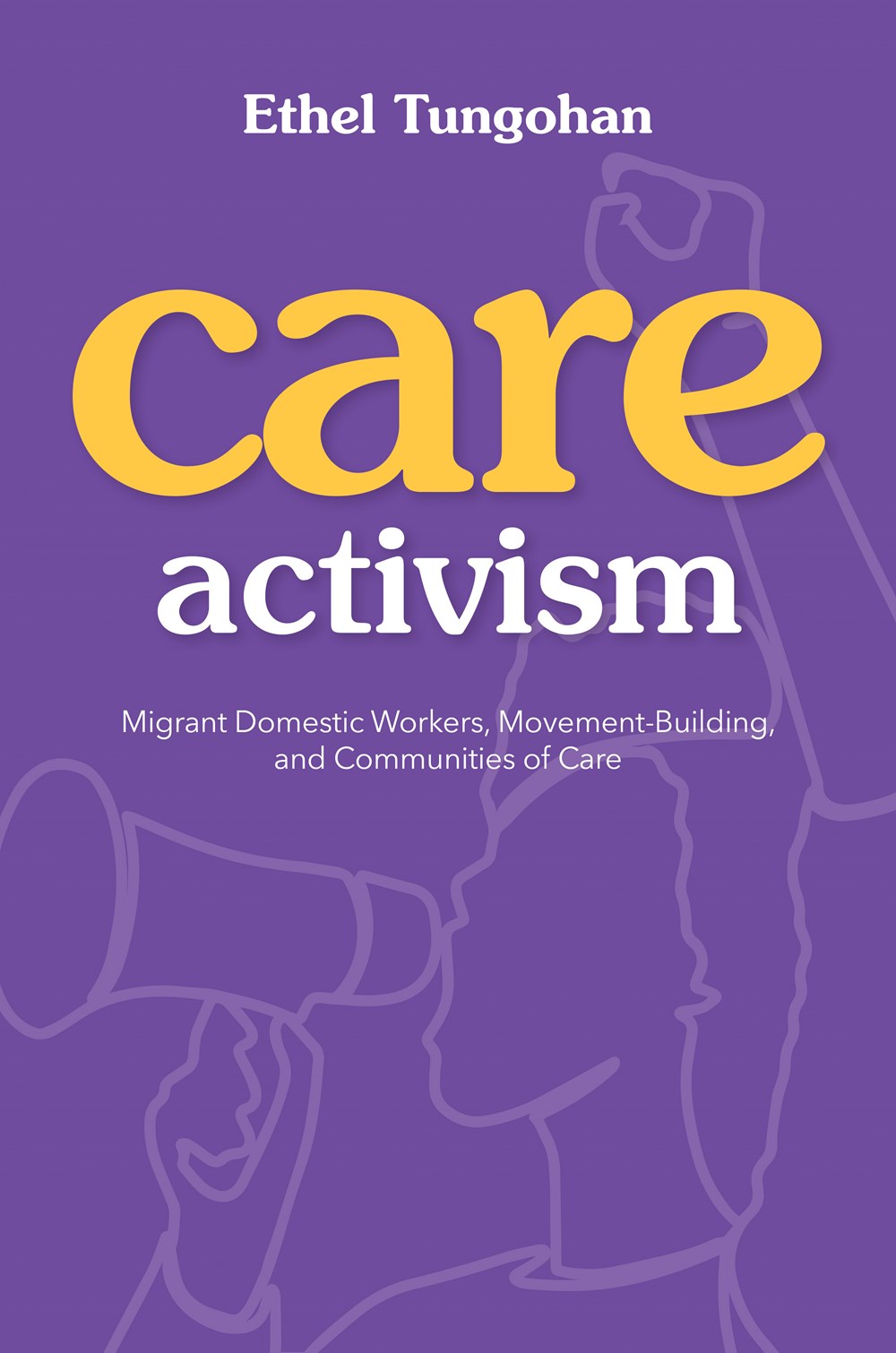
Care Activism: Migrant Domestic Workers, Movement-Building, and Communities of Care
by Ethel Tungohan
Sold out*Ships in 7-10 Business Days*
Care activism challenges the stereotype of downtrodden migrant caregivers by showing that care workers have distinct ways of caring for themselves, for each other, and for the larger transnational community of care workers and their families. Ethel Tungohan illuminates how the goals and desires of migrant care worker activists goes beyond political considerations like policy changes and overturning power structures. Through practices of subversive friendships and being there for each other, care activism acts as an extension of the daily work that caregivers do, oftentimes also instilling practices of resistance and critical hope among care workers. At the same time, the communities created by care activism help migrant caregivers survive and even thrive in the face of arduous working and living conditions and the pains surrounding family separation. As Tungohan shows, care activism also unifies caregivers to resist society’s legal and economic devaluations of care and domestic work by reaffirming a belief that they, and what they do, are important and necessary.
- Gone Wolf
![Gone Wolf]()

Gone Wolf
by Amber McBride
$17.99*ships in 7-10 business days*
In her first middle-grade novel, award-winning author Amber McBride explores Black pain, trauma, and ultimately, healing through the story of what might happen if white supremacists ceded from the rest of the country.
In the future, a Black girl known only as Inmate Eleven is kept confined—to be used as a biological match for the president's son, should he fall ill. She is called a Blue—the color of sadness. She lives in a small-small room with her dog, who is going wolf more often—he’s pacing and imagining he’s free. Inmate Eleven wants to go wolf too—she wants to know why she feels so blue and what is beyond her small-small room.
In the present, Imogen lives outside of Washington DC. The pandemic has distanced her from everyone but her mother and her therapist. Imogen has intense phobias and nightmares of confinement. Her two older brothers used to help her
- Put Y'all Back in Chains: How Joe Biden's Policies Hurt Black Americans
![Put Y'all Back in Chains: How Joe Biden's Policies Hurt Black Americans]()
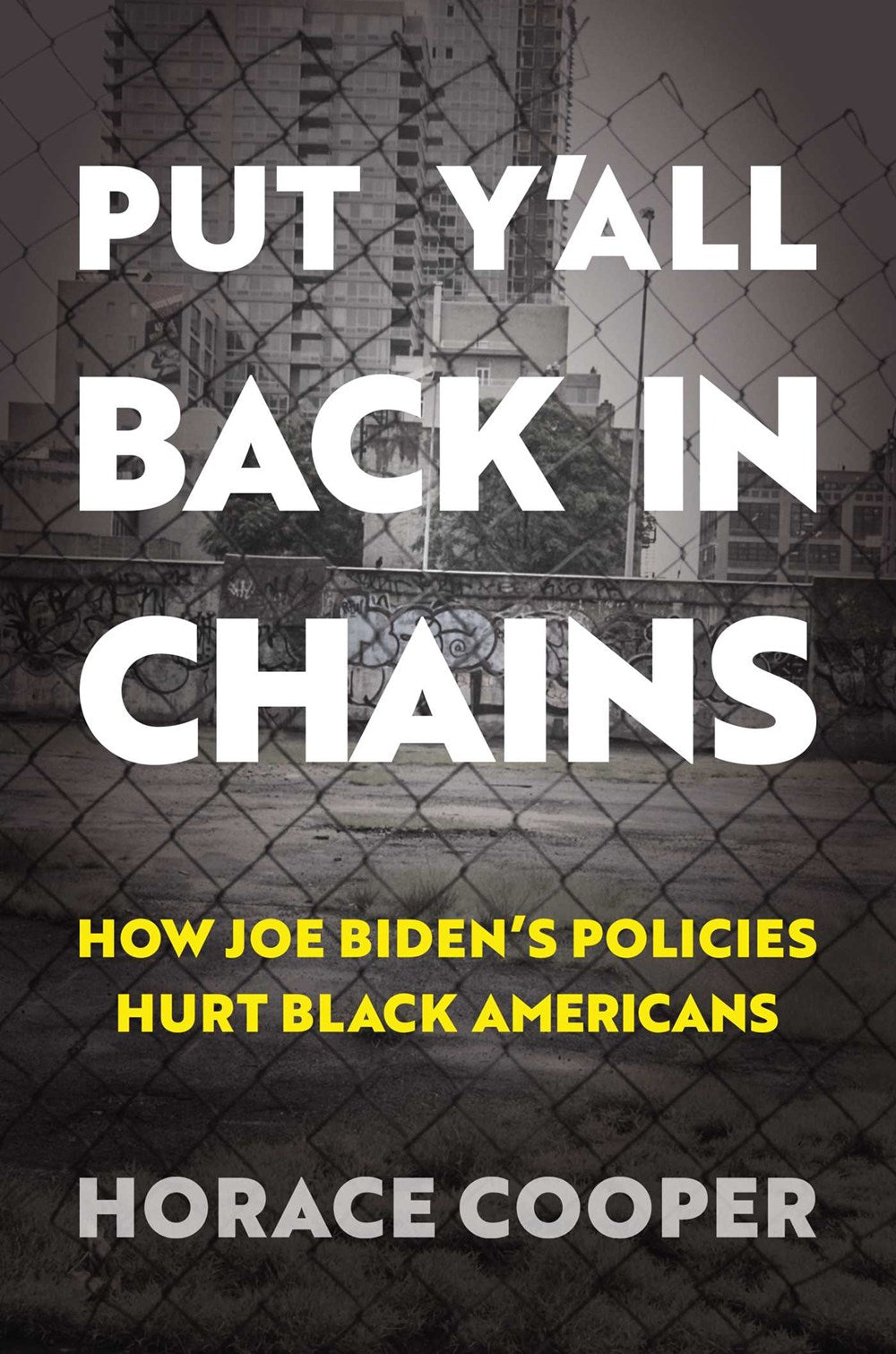
Put Y'all Back in Chains: How Joe Biden's Policies Hurt Black Americans
by Horace Cooper
Sold out*ships in 7 - 10 business days*
Put Y’all Back in Chains outlines how the policies of President Joe Biden harm Black communities and limit opportunities for their success.
“Whether you agree or disagree, Horace Cooper’s latest book tackles the question of how Joe Biden’s policies affect Americans, especially those in minority and underserved communities. His research shows that the injuries are calamitous. Instead of a rising tide lifting all boats, the Biden policies are having a reverse effect, one that devastates bank accounts, crushes entrepreneurship, and steals the promise of the American Dream.
Horace painstakingly combs through the harsh results of these efforts, especially on lower income and working class people, who are hit hardest by the woke-policies of Joe Biden. If you want to see the real story the media isn’t telling, this book is a must read!”
–Sean Hannity, Fox News Host
A thorough examination of the ways that the policies of President Joe Biden are antithetical to the aspirations and dreams of Blacks, Put Y’all Back in Chains uncovers the reasons that the policies of the Biden Administration hurt Black communities in particular. And this is no accident.
Progressive policymakers relished Biden’s COVID-19 pandemic restrictions, his experiments with higher unemployment benefits and related regulatory programs, and especially his push for the green agenda. Consequently, working-class people, especially Black men, were hardest hit when it comes to finding employment as well as maintaining their financial lifestyle. Tragically, the Biden Agenda hurt the entire Black community, affecting educational attainment, wealth creation, and homeownership.
These dramatic downward changes were particularly hard to absorb for Black households, especially those that made tremendous gains during the Trump Administration.
It is increasingly clear that President Joe Biden’s priorities place Blacks at the back of the political bus.
In this thoroughly researched book, Horace Cooper outlines how the minority group most likely to support Biden—Blacks—are systematically impaired by this White House and why the Black community needs to turn away from the Biden Administration and toward a brighter future. - Toward Liberation: Educational Practices Rooted in Activism, Healing and Love
![Toward Liberation: Educational Practices Rooted in Activism, Healing and Love]()
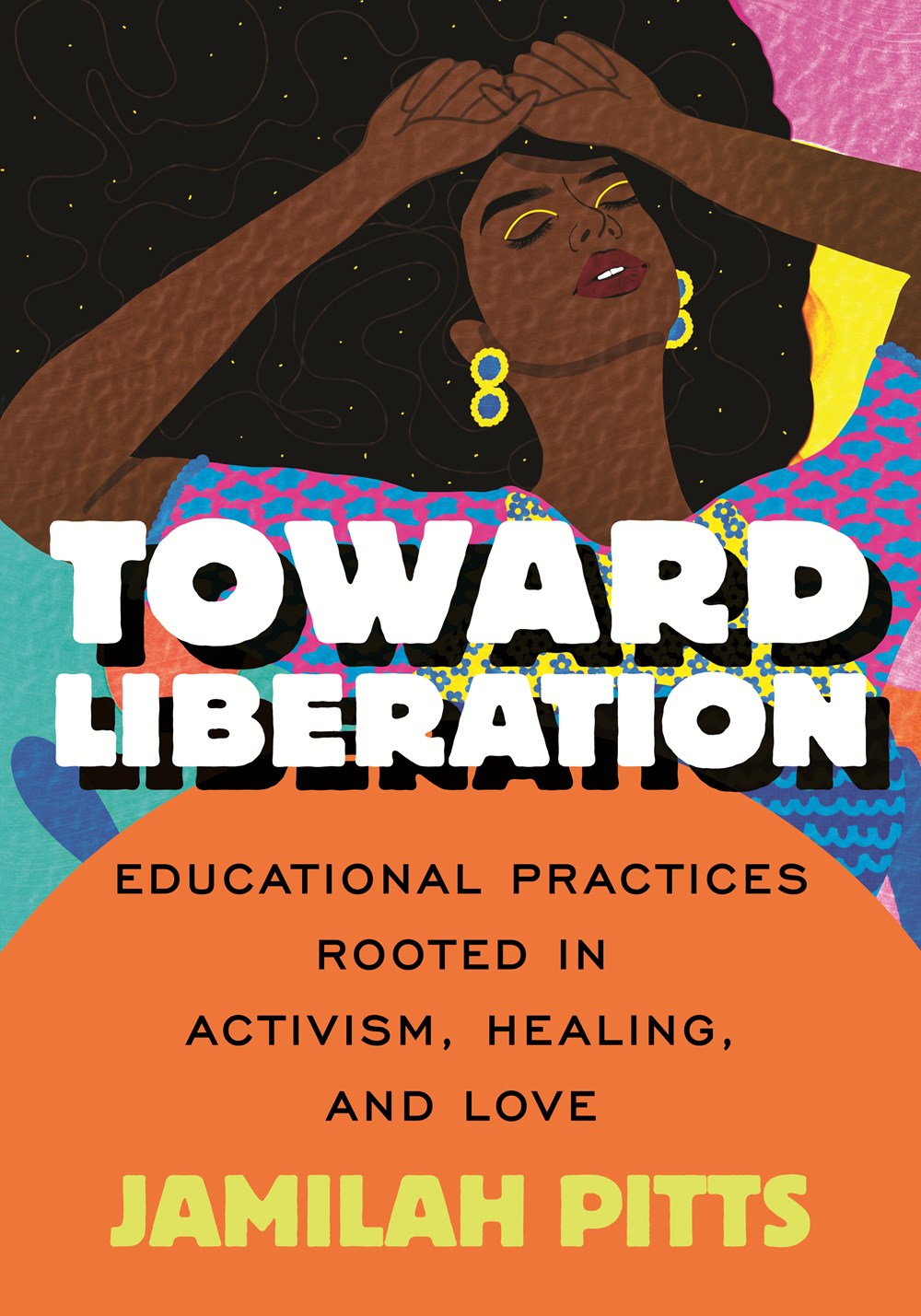
Toward Liberation: Educational Practices Rooted in Activism, Healing and Love
by Jamilah Pitts
$21.95*Ships in 7-10 business days*
An essential guide for frontline educators to address systemic racial oppression, repair harm, and foster safe, inclusive learning spaces for their students
For educators and readers of Bettina Love’s We Want to Do More Than Survive, with a foreword by Leigh Patel, author of No Study Without Struggle
Toward Liberation is the timely and practical guide that pioneers new pathways for educators to repair harm and foster transformative learning spaces. This road map for liberatory pedagogy is replete with resources, tools, and strategies drawn from Jamilah Pitts's experiences as a young Black girl, a Black student, a teacher, a former school leader, and a consultant with schools across the country.
Educators will want to mark up and keep their copy of Toward Liberation at their desks for easy reference. In its pages, they will find- Real-life examples and student writing from Pitts’s classroom
- Explorative questions for teachers to consider in their equity work
- Constructive charts that map out manifestations of harm
- Activities to engage students in liberatory learning
- Healing and self-care strategies for teachers—particularly Black women educators
Pitts infuses her writing with an extensive knowledge base of the education system, honed over years as a teacher, a coach, a dean, an assistant principal, and a national education consultant. The tenets of this book—rooted in truthtelling, activism, healing, wellness, self-care, and, ultimately, love— both inform and are inspired by the healing work Pitts does with educators to this day. In doing this work, she helps to reimagine the role of the critical teacher.
Toward Liberation equips teachers with the tools they need to carve a path toward liberatory educational practices, ensuring that students are afforded the full range of their humanity and their experience, in and out of the classroom. - Bird Uncaged: An Abolitionist's Freedom Song
![Bird Uncaged: An Abolitionist's Freedom Song]()
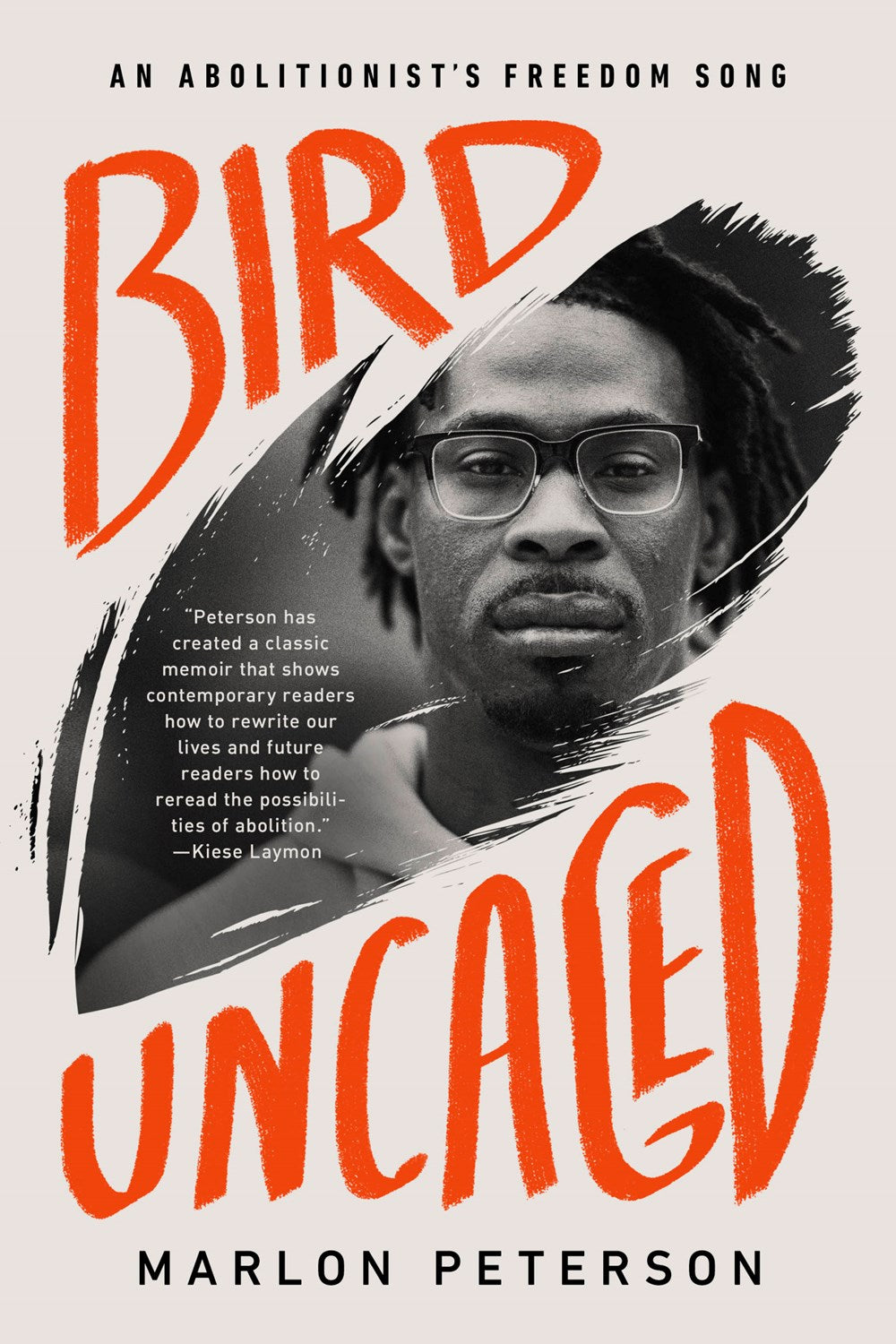
Bird Uncaged: An Abolitionist's Freedom Song
by Marlon Peterson
$18.99*ships in 7-10 business days
From a leading prison abolitionist, a moving memoir about coming of age in Brooklyn and surviving incarceration—and a call to break free from all the cages that confine us.
Marlon Peterson grew up in 1980s Crown Heights, raised by Trinidadian immigrants. Amid the routine violence that shaped his neighborhood, Marlon became a high-achieving and devout child, the specter of the American dream opening up before him. But in the aftermath of immense trauma, he participated in a robbery that resulted in two murders. At nineteen, Peterson was charged and later convicted. He served ten long years in prison. While incarcerated, Peterson immersed himself in anti-violence activism, education, and prison abolition work.
In Bird Uncaged, Peterson challenges the typical “redemption” narrative and our assumptions about justice. With vulnerability and insight, he uncovers the many cages—from the daily violence and trauma of poverty, to policing, to enforced masculinity, and the brutality of incarceration—created and maintained by American society.
Bird Uncaged is a twenty-first-century abolitionist memoir, and a powerful debut that demands a shift from punishment to healing, an end to prisons, and a new vision of justice.


- ← Previous
- page 1
- page …
- page 4
- page 5
- page 6
Stay Informed. We're building a community committed to celebrating Black authors + artisans. Subscribe to keep up with all things Kindred Stories.